Walker Tray vs Walker Bag: Which Is Better? (November 2026)
Choose a walker tray for a flat surface and easy access to items; choose a walker bag or pouch to keep belongings enclosed. Your routine, walker style and the items you carry can help decide which works better.
On this page (7 sections)
- Walker tray vs walker bag: which should you choose?
- What do you need to carry on your walker?
- Which accessory gives you the most usable access?
- Which option fits your walker?
- How do a tray and a pouch handle drinks?
- What should you check before adding a walker accessory?
- Which walker tray or pouch matches your routine?
Choose a walker tray for a flat surface and easy access to items; choose a walker bag or pouch to keep belongings enclosed. Your routine, walker style and the items you carry can help decide which works better.
A tray suits a moment when you want to set something down in plain view. It can hold a plate, a book or a cup while you sit or move from one room to another.
A bag suits a different kind of moment. It keeps everyday essentials grouped together, so small items stay with you instead of being left on a table.
Think about how you use your walker during a normal day. Some people mainly walk short distances indoors, while others carry a few things on every trip.
If you often eat, read or do a crossword while seated, a flat surface may matter more than a closed compartment. You can place an item down and pick it up again without opening anything.
If you often carry a phone, glasses, medicine or a wallet, a pocket or compartment may matter more. Those items are easier to keep together when they have their own place.
A basket can sit between those two choices. It gives you an open area for belongings and, in some designs, a flatter insert for smaller items.
Your walker style matters just as much as your habits. Check how an accessory attaches, whether it gets in the way of your hands or folding frame, and how much weight it can carry.
A tray that slides over the handles changes how you grip the walker. A bag that hangs from loops changes how you reach across the front of the frame.
Also consider the paths you use at home. An accessory that feels fine in a wide room may catch on a door frame or make a narrow hallway harder to manage.
Look at the items you carry most often and how you reach for them. The best choice is the one that keeps them close without making the walker harder to control.
Start with your usual routine, then match the accessory to it. That order helps you avoid buying storage you will not use or a surface that does not fit your daily needs.
Check width, folding, brakes and hand clearance before you buy. A short test walk can show whether the accessory helps or gets in the way.
 Best for an open basket
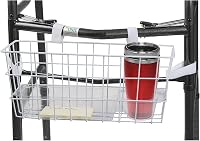
HealthSmart Durable Walker Accessories Basket For Walker

Walker tray vs walker bag: which should you choose?
Choose a tray when you need a broad, open surface; choose a bag when you want organized storage. A basket with a removable insert offers a middle ground, with an open top and a flatter base for smaller items.
A tray is handy for a meal, book or other item you want to set down without opening a compartment. The Bluestone tray has a 21 x 16 in surface, two cup holders and a raised edge.
That size gives you room to place more than one item at once. You can set down a drink and a small plate, or a book and a cup, without stacking them on top of each other.
The raised edge is a small detail with a practical purpose. It helps keep objects from slipping off when the walker moves across a floor or turns a corner.
Two cup holders also suit people who carry more than one drink. One holder may suit a cup of tea, while the other can hold water for the trip.
A pouch keeps belongings gathered while you move. The Vive bag has a zippered inner compartment and three outer pockets, while the FINPAC tote has six pockets.
That kind of layout suits people who like each item to have its own place. A phone, glasses or medicine can stay separate from snacks or other small essentials.
A zippered compartment adds another layer of organization. It can help keep items together when you do not want them loose in an open pocket.
The Vive bag is made from water-resistant nylon and can be machine washed. Washing it in cold water and letting it air dry is the care method described for it.
The FINPAC tote is made from water-resistant polyester and can be wiped clean or machine washed. Its six pockets are meant for daily essentials such as a water bottle, pill case, cell phone, tablet, notebook or eyeglasses.
If you want both storage and a surface for small items, consider the HealthSmart basket. Its removable plastic tray insert helps keep small belongings from falling through the basket openings.
The basket measures 16 x 5.5 x 7 in and has a stated capacity of 10 pounds. It also has one built-in cup holder for a drink.
Its insert measures 15 x 4.5 x 2.5 in and can be removed for cleaning. That removable piece makes it easier to wipe away spills or crumbs from the base.
The basket uses adjustable hooks and loop straps and needs no tools for installation. It is optimized for walkers with straight front bars, so check your walker shape first.
A tray suits a surface first and storage second. A bag suits storage first and no surface, while a basket leaves belongings open rather than enclosed.
| Product | Best for | Storage | Drink holders | Attachment | Our score |
|---|---|---|---|---|---|
| HealthSmart Durable Walker Accessories Basket For Walker | an open basket | Open basket with removable plastic tray | 1 built-in cup holder | Adjustable hooks and loop straps | 9.7 |
| Bluestone Walker Tray Table with 2 Cup | a flat table | 2 cup holders | Slides over walker handles | 9.5 | |
| Vive Walker Bag | enclosed storage | 1 zippered compartment and 3 outer pockets | 7 reinforced loops | 9.4 | |
| FINPAC Large Walker Tote Bag w/Cup Holder | pocket variety | 6 pockets | 9.0 |
What do you need to carry on your walker?
Let the items you carry most often guide the choice. A phone and glasses call for different storage than a drink or a meal.
Make a short list of the items you reach for during a typical walk around your home or neighborhood. Think about how often you need each item and whether you want it visible, enclosed or set on a flat surface.
When a walker tray or basket is useful
A tray works well for things you need to place down or carry from room to room. It can also make a walker more useful for eating, reading, crafts or a crossword.
A basket offers a little storage along with the convenience of a cup holder. The HealthSmart basket has one holder, adjustable straps and a removable insert.
It measures 16 x 5.5 x 7 in.
The insert can help keep smaller items from falling through the openings. The basket is designed for walkers with straight front bars, so check your walker’s shape before choosing it.
When a walker bag or pouch is useful
A bag suits essentials you want grouped together and ready to reach. The Vive bag has a secure zippered inner compartment and three outer pockets for items such as drinks, snacks, glasses or electronic devices.
The FINPAC tote has six pockets, reflective stripes and a clear window for an emergency medical card. Its water-resistant polyester can be wiped clean, and the product description also says it can be machine washed.
A bag doesn’t give you a flat surface for carrying a meal or using your walker as a table. If you need that kind of surface more than storage, a tray may fit your routine better.
Which accessory gives you the most usable access?
A tray keeps items in view, while a pouch separates them into pockets or a compartment. Think about what you can comfortably reach without letting go of the walker handles for too long.
The Bluestone tray slides over the handles of a standard folding walker and needs no assembly. Its raised edge helps keep objects from slipping off, but it does not enclose them.
You can see everything on that tray at a glance. That makes it easy to reach for a cup or a book, but it also means nothing is tucked away.
The tray surface measures 21 x 16 in and is made from high-impact polystyrene plastic. The handle slots measure 11.75 x 2 in, which is why the walker style matters before you choose it.
The Vive bag uses seven reinforced loops to attach to a walker. Its outer pockets can keep frequently used items separate from belongings in the zippered compartment.
That separation can make daily use feel calmer. Items you reach for often can sit in an outer pocket, while items you carry for safekeeping can stay in the main compartment.
The large inner compartment has a secure zippered closure. It can hold a purse, a change of clothes or necessary medical supplies, according to the product description.
The sturdy nylon bag is lightweight and water-resistant. It is also machine washable, with cold water washing and air drying described for best results.
The FINPAC tote uses hook-and-loop straps. Its pockets may help you organize small essentials, while the clear window gives you a place for an emergency medical card.
That clear window gives the card a fixed place instead of leaving it loose in a pocket. The tote also has reflective stripes seamed into it, making it more eye-catching at night.
No accessory should make it harder to grasp the handles, control the walker or reach the brakes. Put items where they are easy to reach, and avoid loading the walker in a way that changes its balance.
Good access means you can reach what you need without shifting your grip for long. If an item sits too low, too far forward or behind your hands, it may not be easy to use while moving.
Keep frequently used items where you can see or feel them quickly. A phone or glasses may suit an outer pocket, while less used items can stay deeper in the main compartment.
After you fit an accessory, walk a short route and check your grip. You should still be able to turn, stop and reach the brakes without the accessory getting in the way.
Which option fits your walker?
Check the accessory’s attachment method and fit notes against your exact walker. Walker frames differ, and an accessory that fits one style may not attach properly to another.
The Bluestone tray is made for most standard folding walkers and has slots that slide down over the handles. If your walker is not a standard folding style, confirm compatibility before choosing it.
The HealthSmart basket uses adjustable hooks and loop straps. It is optimized for walkers with straight front bars and is described as fitting most walkers and rollators.
The Vive bag uses adjustable loops and is described as fitting all walker styles, including standard, bariatric and dual-point folding walkers. The FINPAC tote’s straps are described as fitting most sizes and styles of folding walkers.
If you are still choosing a mobility aid, start with the complete walker buying guide. People comparing different styles can also read about a U-Step walker vs rollator, or see what a junior rollator is.
How do a tray and a pouch handle drinks?
Choose a holder designed for your drink if you want to carry it on the walker. The HealthSmart basket has one built-in cup holder, and the Bluestone tray has two.
The Bluestone holders are part of its 21 x 16 in tray. Its raised edge also helps keep other objects from slipping off the surface, but it does not close around belongings.
Each Bluestone cup holder measures 2.75 in, and the distance between the two holders is 8.5 in. That spacing gives each drink its own place instead of forcing them close together.
The tray is made from high-impact polystyrene plastic and slides over the handles of most standard folding walkers. It needs no assembly and can be used as a table or as a tray for carrying things from room to room.
That design suits a meal, a book, crafts, knitting or a crossword, as well as drinks. The surface is broad enough for a cup and another item to sit side by side.
The HealthSmart basket takes a different approach to drinks. Its built-in cup holder is made to keep a drink stable while your hands stay free.
The basket is optimized for walkers with straight front bars for a secure, proper fit. That front bar shape should be checked before you rely on the holder for a drink.
The basket also has a removable plastic tray insert that measures 15 x 4.5 x 2.5 in. The insert helps keep smaller items from falling through the basket openings and can be removed for cleaning.
Its rust-resistant coating adds a polished finish to the basket. The basket measures 16 x 5.5 x 7 in and has a stated capacity of 10 pounds.
The FINPAC name includes a cup holder, but its described features do not specify the holder design or placement. The Vive bag pockets include space for drinks, but a dedicated cup holder is not specified.
That difference matters in daily use. A named holder may promise a place for a cup, while a pocket may simply offer space for a bottle or a drink container.
The FINPAC tote has six pockets and a drawstring mesh pocket for water bottles or umbrellas. It also has two pen slots and a loop on the zipper pull.
Its hook-and-loop straps are long enough to fit most sizes and styles of folding walkers. The exterior is water-resistant polyester, and the bag can be wiped clean or machine washed.
The Vive bag has three outer pockets for everyday items such as drinks and snacks. Those pockets give you access, but they are not the same as a holder shaped for a cup.
Whatever you choose, do not let a drink or its holder interfere with walking, turning or using the brakes. If the setup feels unstable, carry the drink another way.
A full or tall drink can shift when you start, stop or turn. Place it where it stays upright without crowding your hands or the walker frame.
Start with a small amount of liquid and walk a short route to check stability. If the drink wobbles or the holder moves, that accessory may not suit the way you walk.
What should you check before adding a walker accessory?
Check fit, reach, clearance and weight before using a tray or bag. A convenient accessory should leave you able to control the walker and move through your usual spaces.
Look at how the accessory attaches and whether it changes the walker’s folding or storage routine. Also check that it stays clear of the wheels, seat, brakes and handles.
The HealthSmart basket has a stated maximum capacity of 10 lb. The other three products here don't have a weight limit specified, so don't apply that capacity to them.
If you use a rollator, consider how a bag might sit when you sit down or fold the frame. For help choosing a walker style, compare the best rollator walkers for seniors.
A walker accessory also shouldn't replace a mobility aid or support surface that fits your needs. If you have questions about safe use with your walker, ask a qualified clinician or the walker’s manufacturer.
Which walker tray or pouch matches your routine?
Pick the Bluestone tray if a wide surface and two cup holders matter most; pick the Vive bag if you want a zippered compartment and outer pockets. The FINPAC tote suits pocket organization, while the HealthSmart basket combines open storage with an insert and a cup holder.
For an open basket with a removable insert, the HealthSmart accessory is a practical match. It has adjustable straps, a built-in cup holder and a stated 10 lb capacity.
For storage that keeps items enclosed, choose a bag based on how you prefer to organize them. The Vive Walker Bag has a zippered compartment and three outer pockets; the FINPAC tote has six pockets and reflective stripes.
For a different kind of bag reference, see the Best Mobility Scooter Handlebar Bag. That guide is for scooter handlebar bags, so check that any accessory you consider is made for your mobility aid.
Choose a walker tray for a flat surface, a bag for enclosed storage, or a basket if you need both an open area and a place for a drink. Compare the attachment style with your walker before you buy.
Our score weighs specs, features and buyer feedback against what you're shopping for.
Frequently asked questions
Is a walker tray or pouch better for carrying a drink?
A tray or basket with a built-in cup holder is a direct choice for carrying a drink. The HealthSmart basket has one holder, while the Bluestone tray has two.
For any accessory, check that it fits your walker and follow its instructions; keep the drink stable and avoid carrying anything that makes the walker harder to control.
Can a walker bag hold small items securely?
A bag with a zippered compartment can help keep small belongings together. The Vive bag has a zippered inner compartment and three outer pockets, while the FINPAC tote has six pockets.
Place items so they don't shift or interfere with your hands, wheels or walker frame.
Will a walker tray fit every walker?
No single tray should be assumed to fit every walker. The Bluestone tray is described as fitting most standard folding walkers, and the HealthSmart basket is intended for walkers with straight front bars.
Compare your walker’s shape and measurements with the accessory before choosing.
Can you use a tray and a bag on a walker?
Some people may be able to use both, but fit and clearance depend on the walker and how each accessory attaches. Check whether they block folding, hand placement or safe access to the brakes.
If you use a rollator, also consider where bags sit near its seat and wheels.
What should you carry in a walker pouch?
Keep only items you need during the walk, such as a phone, glasses or medicine, and distribute them so the bag stays balanced. Avoid heavy loads that could affect handling.
The HealthSmart basket has a stated 10-pound capacity; don't assume other accessories share that limit.