

The best mobility scooter for grocery shopping is typically a three-wheel model. These scooters offer the tightest turning radius, making them ideal for navigating narrow grocery store aisles. Look for a model with a decent weight capacity and a spacious basket to carry your groceries easily.
When choosing a scooter for shopping trips, consider its portability and battery life. You’ll want something easy to transport if you’re not driving directly to the store. A good battery ensures you can complete your shopping without worry. We found that maneuverability is key in crowded spaces.
- Three-wheel scooters are best for tight turns.
- Check for a good weight capacity and basket size.
- Portability and battery life are important considerations.
- Maneuverability helps you navigate crowded stores easily.
Let’s walk through exactly what to look for in a mobility scooter to make your grocery runs a breeze.
Choosing the Right Mobility Scooter for Your Shopping Trips
Finding the best mobility scooter for grocery shopping means looking for specific features that make navigating stores and carrying your goods easier. Think of it like picking the right cart at the supermarket – you want one that’s easy to push and holds everything you need. We’ve found that a few key aspects make all the difference.
Three Wheels vs. Four Wheels: The Turning Radius Showdown
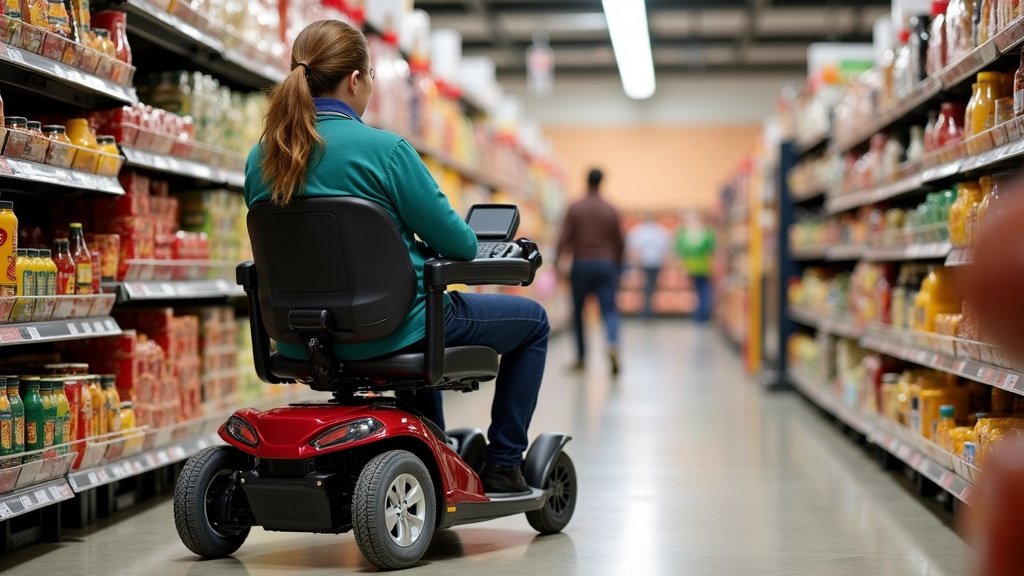
When you’re trying to squeeze down a tight grocery aisle, the ability to make sharp turns is a lifesaver. This is where three-wheel scooters often shine. They are engineered to have a much tighter turning radius. This means you can pivot and maneuver without bumping into displays or other shoppers. We’ve seen that four-wheel models tend to be more stable on rougher outdoor terrain, but for the indoor dance of grocery shopping, three wheels usually take the lead.
Imagine trying to turn your car around in a cramped parking lot versus an open road. A three-wheel scooter is like the nimble car in the tight parking lot. It can turn on a dime, making those tricky aisles feel less like a maze. Many people find this maneuverability to be the most important factor when shopping for a scooter for indoor use.
Capacity and Carrying Power: Beyond Just Getting There
Grocery shopping involves, well, groceries! So, the scooter’s ability to help you carry them is a big deal. We found that looking at the weight capacity is important not just for you, but also for what you can bring back home. If you regularly buy heavy items like milk jugs or canned goods, ensure the scooter can handle the load comfortably.
The built-in basket is your new best friend. Most mobility scooters come with a front basket, but their sizes vary greatly. Some are quite small, barely holding a loaf of bread. Others are quite generous. When you’re comparing models, pay close attention to the basket dimensions. You might even consider if there’s space to attach additional bags or a cooler.
We also found that some scooters offer optional accessories, like rear-mounted bags or platforms. These can add significant carrying capacity. Think about your typical shopping list. Will a standard basket suffice, or will you need extra storage solutions? Planning this ahead can save you a lot of hassle later.
Weight Capacity: More Than Just Your Weight
It’s not just about your personal weight limit. The scooter’s weight capacity also accounts for the items you’ll be carrying. If the scooter is rated for 300 lbs and you weigh 250 lbs, you only have 50 lbs left for groceries. We found that many people underestimate this. It’s wise to choose a scooter with a higher weight capacity than you strictly need.
Basket Size: Your Personal Shopping Cart
Don’t underestimate the humble basket! A deep, wide basket can make a huge difference. You want something that can hold several bags of groceries. Some scooters have mesh baskets, which are great for airflow but might not be sturdy enough for heavy items. Others have solid plastic or metal baskets. Research found that a reinforced basket is usually a better bet for carrying heavier loads.
Portability and Power: Getting to the Store and Back
How will you get to the grocery store? If you’re driving, you’ll need a scooter that’s easy to transport in your vehicle. This often means looking at scooters that can be disassembled into lighter pieces or folded. While many high-powered scooters are not designed for easy disassembly, lighter travel models are. We found that portability is a key differentiator for many users.
Beyond getting there, you need to consider the battery life. You don’t want to run out of juice halfway through your shopping trip or on the way home. Check the estimated travel range per charge. This is usually listed in miles. Consider the distance to your usual grocery store and back, plus any extra errands you might do.
Disassembly and Weight
If you need to lift the scooter into your car, its weight and how it breaks down are critical. Many travel scooters can be taken apart into several manageable pieces. We found that the heaviest piece is often the battery pack, but the frame can also be substantial. Lighter components make loading much easier. Some models weigh under 100 pounds total, with individual pieces much lighter.
Battery Range: Don’t Get Stranded!
Battery range is typically measured in miles per charge. For most local grocery runs, a range of 10-20 miles is usually more than sufficient. However, if you live further away or plan on combining shopping with other outings, you’ll want to look for models with a longer travel range. We found that manufacturers often provide a range based on ideal conditions, so actual mileage may vary.
Maneuverability and Comfort: Your Shopping Experience
We’ve talked about turning radius, but overall maneuverability is crucial. This includes how smoothly the scooter handles different surfaces, its stability, and how easy it is to steer. Grocery store floors can sometimes be slick, and you might encounter small ramps or uneven tiles.
Comfort is also key. You might be spending a fair amount of time on your scooter, both in the store and getting there. Look for comfortable seating, adjustable tiller (the steering column), and smooth acceleration. A comfortable ride means you’ll actually enjoy your shopping trips rather than dreading them.
Steering and Suspension
The tiller controls steering. Some are adjustable, allowing you to position it at an angle that feels natural for you. Good suspension can absorb bumps and vibrations, making for a smoother ride. We found that scooters with better suspension systems are generally more comfortable, especially if you’re navigating any uneven pavement outside the store.
Seating and Ergonomics
A well-padded seat with good back support is essential. Many scooters offer adjustable seats, allowing you to set the height and angle. Consider the armrests too; they should be comfortable and supportive. Good ergonomics can prevent fatigue and make your shopping much more pleasant. Many experts suggest trying out different seat types if possible before buying.
Key Features Checklist for Grocery Shopping Scooters
To help you narrow down your choices, here’s a quick checklist of what to prioritize for grocery shopping:
- Three-wheel design for superior turning ability in tight spaces.
- Generous weight capacity to support both you and your groceries.
- Large, sturdy front basket for carrying multiple shopping bags.
- Decent battery range to comfortably complete your trips.
- Compact and portable design if you need to transport it in a vehicle.
- Comfortable seating and adjustable controls for an enjoyable experience.
Comparing Scooter Types: A Quick Look
Mobility scooters generally fall into a few categories. Understanding these can help you find the right fit for your grocery needs.
| Scooter Type | Best For | Grocery Shopping Suitability |
|---|---|---|
| Travel/Portable Scooters | Lightweight, easy transport, short trips | Good, especially three-wheel models. Basket size can be small. |
| 3-Wheel Scooters | Maneuverability, indoor use, tight spaces | Excellent. Their turning radius is ideal for store aisles. |
| 4-Wheel Scooters | Stability, outdoor use, varied terrain | Fair. Can be less maneuverable in tight aisles. Often have larger baskets. |
| Heavy-Duty Scooters | Higher weight capacity, longer range, rough terrain | Overkill for most indoor shopping, but offer robust carrying capacity. Can be bulky. |
As you can see, for grocery shopping specifically, three-wheel travel scooters often hit the sweet spot. They offer the best combination of maneuverability, portability, and functionality for navigating store aisles and carrying your purchases.
Conclusion
Finding the best mobility scooter for grocery shopping comes down to a few key features. Prioritizing a three-wheel model will give you the best maneuverability for tight aisles. Don’t forget to check the weight capacity and ensure the basket is large enough for your needs. If you transport your scooter, its portability and battery range are essential. Your next step is to assess your personal needs and compare models based on these crucial factors. This will help you make an informed choice for stress-free shopping trips.
Frequently Asked Questions
Can I use a four-wheel scooter for grocery shopping?
Yes, you can use a four-wheel scooter, but they are generally less maneuverable in tight grocery store aisles. Research found that their wider turning radius can make navigating crowded spaces more challenging compared to three-wheel models. However, if stability is your top priority or you shop in less congested stores, a four-wheel scooter can still work.
How much weight should the mobility scooter’s basket hold?
The ideal basket size varies based on your typical shopping habits. We recommend looking for a basket that can comfortably hold at least 10-20 pounds of groceries. Many scooters offer generous front baskets, and some allow for additional accessories like rear bags or platforms for more carrying capacity.
Is battery life really that important for grocery trips?
Absolutely. Battery life, or travel range, is very important. You don’t want your scooter to run out of power halfway through your shopping or on your way home. We found that for most local grocery runs, a range of 10-20 miles per charge is usually sufficient. Always consider the distance to your store and back.
What if I need to transport my scooter in my car?
If you need to transport your scooter, portability is key. Look for models that are designed to be disassembled into lighter pieces or can be easily folded. Travel scooters are often built with this in mind, making them easier to lift into a vehicle. Always check the weight of individual components if you have lifting limitations.
Are three-wheel scooters stable enough for outdoor shopping?
While three-wheel scooters excel in maneuverability indoors, their stability on outdoor terrain can vary. Research suggests they are generally stable, but four-wheel scooters often offer superior stability, especially on uneven surfaces or inclines. If you plan to do a lot of outdoor shopping or travel over rougher ground, you might consider a four-wheel model.
