Can You Put Snow Tires on a Mobility Scooter?
Mobility scooter snow tires may work on some models if the maker approves them and the tires match the wheels. Check the manual, tire size, rim, and clearance before buying, and avoid riding when snow or ice makes control uncertain.
On this page (7 sections)
- Can you put snow tires on a mobility scooter?
- What should you check when choosing mobility scooter snow tires?
- Who should consider snow tires, and who should skip them?
- How should you set up and use compatible snow tires?
- What common mistakes should you avoid?
- What if your scooter has no compatible snow tires?
- Should you buy mobility scooter snow tires?
Mobility scooter snow tires may work on some models, but only if the scooter maker approves them and the tires fit the wheels. Before buying, check the manual, tire size, rim, and clearance, then plan for conditions where traction may still be limited.
A tire labeled for an electric scooter is not automatically right for a mobility scooter. Winter tread also cannot make icy routes safe, so the tire decision should come with a route and weather plan.
Can you put snow tires on a mobility scooter?
Possibly, if the manufacturer allows the tire type and you can find a compatible tire for your exact model. The tire must mount correctly, clear the frame and fenders, and meet the scooter’s requirements.
Start with the owner’s manual and the size printed on the existing tire. If the manual doesn’t identify an approved winter tire, ask the scooter maker or a qualified service shop about your model before you order.
Don’t choose by appearance or a broad label such as “snow tire.” A tire that looks close may have the wrong width, bead, or rim fit.
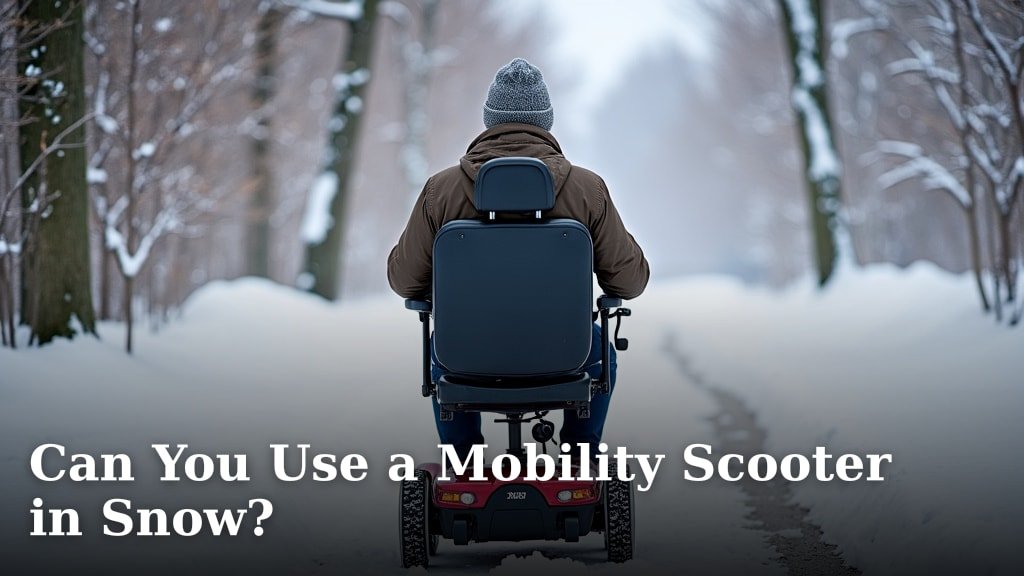
For route and weather guidance beyond tire choice, see Can You Use a Mobility Scooter in Snow?.
What should you check when choosing mobility scooter snow tires?
Check compatibility as a set: tire size, wheel and rim, clearance, and manufacturer approval. A match on only one detail, such as diameter, is not enough.
- Size: Match the tire size printed on the current tire or specified in the manual.
- Rim and mounting: Confirm that the replacement tire is made for that wheel and rim style.
- Width and clearance: Check for room around the frame, fenders, and nearby parts, including when the wheel turns or suspension moves.
- Approved tire type: Ask whether the scooter maker permits the tire construction and tread you’re considering.
- Installation: Find out whether a shop should change the tire, and whether it can confirm fit before installation.
A tire that is too wide can rub against nearby parts. An incompatible bead or rim can prevent proper seating even when the tire’s diameter appears correct.
If the maker permits more than one type, compare their tradeoffs in what is the best tire type for a mobility scooter?. For a compatible replacement, how to replace mobility scooter tires explains the basic process; use a service professional if the manual or your tools leave you unsure.
Who should consider snow tires, and who should skip them?
Consider them if you ride in winter and the scooter maker approves a tire that fits your exact model. They may suit someone who needs better traction on suitable winter surfaces, such as a cleared path with some loose snow.
Skip them if compatibility is uncertain, the tires would rub, the maker doesn’t approve the change, or your usual route is icy, steep, or covered in deep snow. A tire upgrade doesn’t change the scooter’s limits or make unsafe conditions manageable.
They are also a poor choice if you expect them to make every trip possible. Winter travel depends on the surface, slope, temperature, visibility, and your ability to steer and stop, as well as the tire.
For broader model comparisons, see Best Mobility Scooters for Snow. A model’s suitability still depends on its manual and the actual route.
How should you set up and use compatible snow tires?
Have the tires installed and checked according to the scooter manual, then start on a clear, level surface. Confirm the wheels turn freely and the tires don’t touch the frame or fenders before riding.
Follow the maker’s instructions for tire pressure if the tires are pneumatic. If the manual gives no pressure guidance, ask a qualified service shop instead of guessing.
On your first ride, use a short, familiar route with room to stop and turn. Keep the speed low, steer smoothly, leave extra stopping space, and avoid sudden turns or slopes.
Don’t use a risky surface as a test of grip.
After a ride, check for rubbing, damage, or loose fit, especially if the tires were recently installed. If anything feels or sounds different, stop using the scooter until the fit has been checked.
What common mistakes should you avoid?
The main mistake is treating a tire label or visual match as proof of compatibility. Verify the exact tire and wheel details with the manual, scooter maker, or qualified service shop.
Other avoidable errors include:
- Buying a tire based only on diameter while overlooking width, rim style, or clearance.
- Assuming tires for electric scooters will fit a mobility scooter.
- Adding chains, wraps, or improvised tread without the maker’s approval.
- Riding faster because the tread looks more aggressive.
- Assuming snow tires make ice, steep slopes, or deep snow safe.
- Ignoring worn or damaged tires because they still hold air.
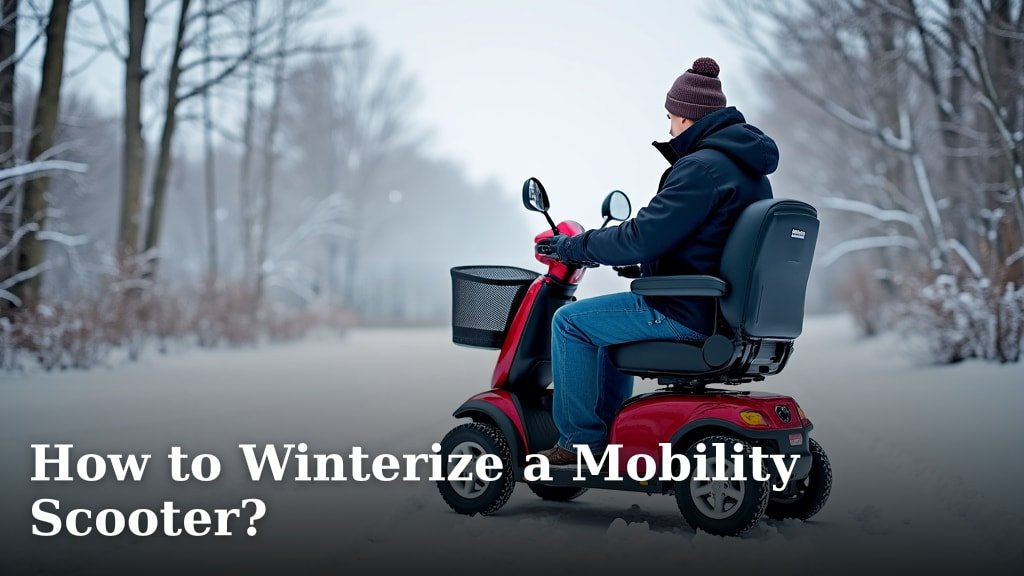
Use how to winterize a mobility scooter for cold-weather care. Winterizing may help protect the scooter from cold and moisture, but it does not improve tire grip.
An enclosure may offer shelter from weather, but it won’t add traction. If rider protection is part of your decision, see enclosed mobility scooters.
What if your scooter has no compatible snow tires?
Stick to cleared, firm routes and change your travel plan when traction is uncertain. Keep the tires in good condition, slow down, and leave more room to stop.
Don’t try an unapproved tire, chain, or wrap as a workaround. If snow or ice covers the route, postponing the trip or using another transport option is safer than relying on extra tread.
The following products are wheelchairs, not mobility scooter snow tires or direct tire alternatives. They may suit caregiver-assisted movement on appropriate, cleared paths.
Check each chair’s instructions and the route before use. Snow, ice, slopes, and uneven ground can affect control, so choose a suitable path and the right assistance.
Should you buy mobility scooter snow tires?
Buy only when the maker confirms that a specific tire fits and is approved for your scooter. If no approved match is available, keep the existing tire type and plan around poor winter conditions.
Choose compatible snow tires if they meet the manual’s requirements and a qualified shop can install them. Skip the change if fit or approval is unclear, or if your routes are often icy or steep.
Mobility scooter snow tires can support winter use on suitable surfaces, but they don’t guarantee grip. Check compatibility first, and use the scooter only when you can steer and stop safely.
Frequently asked questions
Can you put snow tires on a mobility scooter?
Sometimes. The scooter maker must approve the tire type, and the tire must match the wheel, rim, and available clearance.
Check the manual or ask the maker or a qualified service shop about your exact model before buying.
A tire that rubs or changes handling can create a safety problem.
Do mobility scooter snow tires work on ice?
Snow tires may improve grip in some winter conditions, but they don't make a mobility scooter safe on ice. Traction depends on the tire, scooter, surface, and conditions.
Avoid icy routes.
Use a slow pace on firm ground and follow the scooter manual's limits.
Can I use electric scooter snow tires on a mobility scooter?
Don't assume a tire marketed for an electric scooter fits a mobility scooter. Diameter, width, rim style, clearance, and the scooter maker's approval all matter.
Confirm the exact tire specifications with the scooter maker or a qualified repair shop before ordering.
What can I do if snow tires aren't available for my scooter?
Use only tire types approved for your scooter, and avoid routes with snow or ice if traction is uncertain. Keep the tires in good condition, slow down on firm surfaces, and plan another way to travel when conditions are poor.
Winter care can protect the scooter, but it won't create extra grip.