
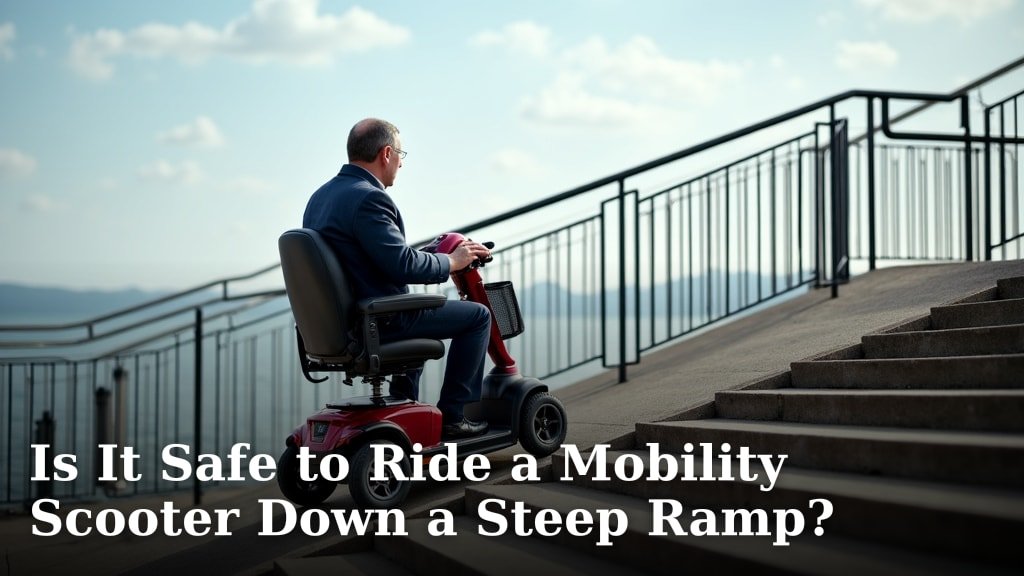
Yes, it can be safe to ride a mobility scooter down a steep ramp, but only if certain safety precautions are met. Your mobility scooter’s weight capacity and braking system are critical factors. Going too fast or at the wrong angle can lead to serious accidents.
Many ramps found in public spaces or even private homes are not designed with mobility scooter users in mind. Understanding the ramp’s gradient and your scooter’s capabilities is essential for preventing tumbles. It’s not just about the scooter; your own confidence and skill play a big role too.
- Riding down steep ramps with a mobility scooter can be safe.
- Key factors include scooter weight limits and brake condition.
- Always check the ramp’s slope and your scooter’s specifications.
- When in doubt, seek assistance or an alternative route.
Let’s walk through exactly what you need to consider to keep yourself safe when approaching a steep ramp.
Navigating Steep Ramps Safely with Your Mobility Scooter
Riding your mobility scooter down a steep ramp can feel daunting. You might wonder if your scooter can handle it. The good news is that with the right knowledge and precautions, it often can be done safely. But safety always comes first. We need to look at your scooter’s limits and the ramp itself. Let’s break down what makes this task safe or risky.
Understanding Your Mobility Scooter’s Capabilities
Your mobility scooter isn’t just a mode of transport; it’s a piece of medical equipment designed with specific capabilities. Understanding these is key before you even approach a ramp. Understanding your scooter’s specific capabilities is key before you even approach a ramp.
Weight Capacity: The Foundation of Safety
Every mobility scooter has a maximum weight capacity. This is the total weight the scooter is designed to carry safely. This includes you, any bags, and anything else you’re carrying. Exceeding this limit puts immense strain on the motor, brakes, and frame. It can lead to decreased performance or even catastrophic failure. Always know your scooter’s weight limit. You can find this information in your user manual. Many scooter manufacturers publish these specs online. Riding over the limit is simply not safe. It’s like trying to lift weights far heavier than you’re capable of. Your scooter needs to be within its operational limits for safe functioning.
Braking System: Your Stopping Power
The braking system is your primary safety feature on any incline. Most mobility scooters use electromagnetic brakes. These brakes engage automatically when you release the throttle. They are generally very reliable. However, their effectiveness can be reduced by wear and tear. Regularly check your brakes. Listen for any unusual noises when they engage. Ensure they hold the scooter firmly when stopped on an incline. If you have any doubts about your brakes’ performance, get them serviced immediately. You don’t want to discover brake issues when you’re halfway down a steep slope. Proper maintenance is essential for reliable stopping power.
Tire Condition and Grip
The tires on your mobility scooter are your connection to the ground. Worn-out tires can significantly reduce traction. This is especially true on smooth or wet surfaces. Check your tires for adequate tread depth. Look for any signs of cracking or damage. Good tire grip is vital for maintaining control. It helps prevent skidding, particularly when descending an incline. If your tires are looking a bit bald, consider replacing them. It’s a small cost for a big safety improvement. A good grip means more stability.
Assessing the Ramp: What to Look For
Not all ramps are created equal. Some are built to accessibility standards, while others might be less ideal. It’s important to assess the ramp before you commit to going down.
Understanding Ramp Gradient: The Steepness Factor
The gradient, or slope, of a ramp is measured as a ratio or percentage. A common standard for accessible ramps is a 1:12 gradient. This means for every 12 inches of horizontal distance, the ramp rises or falls 1 inch. This translates to about an 8.3% slope. Steeper ramps can exceed this. A 1:8 gradient is about 12.5%. Ramps steeper than this can be very challenging for mobility scooters. They can cause the scooter to gain speed too quickly. Your scooter’s manual often specifies a maximum safe operating incline. Many research findings suggest that going beyond a 1:8 gradient requires extreme caution. Some scooter manufacturers advise against using ramps steeper than 1:8 (about 12.5%). Always try to find out the ramp’s specifications if possible. Our guide on outdoor scooters explains if they can handle steep hills.
What is a “Steep” Ramp for a Scooter?
Generally, a ramp is considered steep for a mobility scooter if it’s significantly steeper than the manufacturer’s recommended maximum incline. For most standard scooters, this means anything above a 1:8 (12.5%) gradient. Some heavy-duty scooters might handle slightly steeper inclines, but caution is always advised. If a ramp looks very steep, it probably is. Trust your instincts. If it feels too steep, it likely is too steep for safe operation. Your safety is the priority here.
Surface Condition and Obstacles
The material of the ramp and its condition matter. Is it smooth concrete, rough asphalt, or something else? Are there any loose gravel, debris, or cracks? A smooth, well-maintained surface offers better traction. Rough surfaces can cause vibrations and make steering more difficult. Loose debris can be a real hazard. It could cause your scooter to slip or even get stuck. Always visually inspect the ramp before you proceed. Remove any obvious obstructions if you can safely do so. A clear path is a safer path.
Length and Landing Area
A longer ramp might seem less steep, but it also gives you more time to gain speed. A short, very steep ramp can be just as tricky. What’s most important is the landing area at the bottom. Is there a clear, level space to stop safely? Are there any immediate obstacles like doors, curbs, or drop-offs? Ensure the landing zone is clear and safe before you start your descent. You need room to maneuver and come to a controlled stop. A clear landing zone prevents secondary accidents.
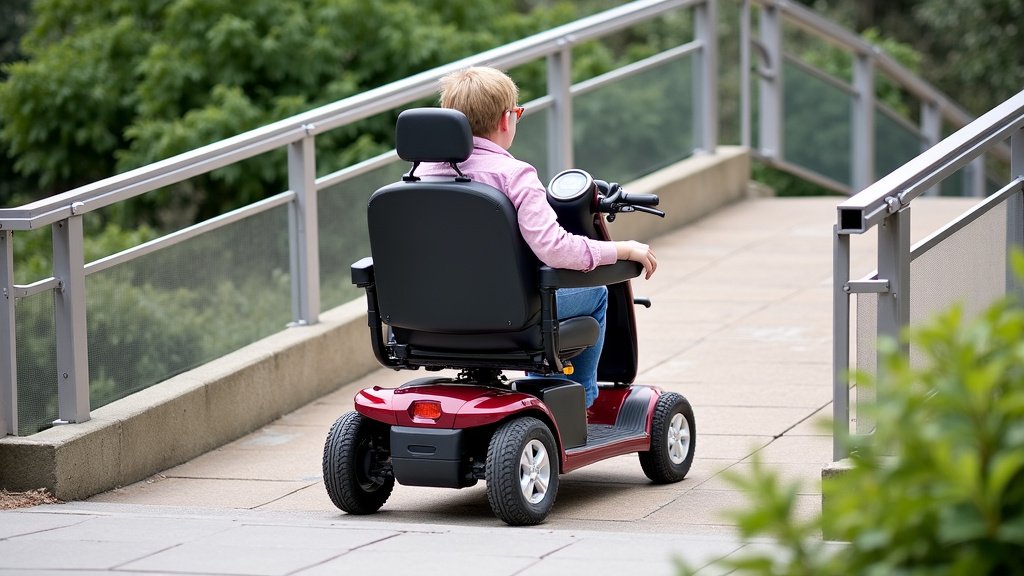
Safe Riding Techniques for Descending Ramps
Even with a suitable scooter and ramp, your technique is vital. How you approach and navigate the ramp makes all the difference.
Maintaining Control and Speed
The golden rule is to go slowly and maintain control. Never let your scooter pick up excessive speed. Most scooters have variable speed controls. Use them to keep your speed low. If your scooter starts to accelerate too quickly, you might need to gently apply the brakes to slow down. Do not slam on the brakes, as this can cause instability. Smooth, controlled movements are key. Think of it like slowly easing your car down a hill in low gear. You’re guiding the descent, not letting it happen to you.
Body Positioning for Stability
Maintain a stable posture in your seat. Keep your back straight and your feet flat on the floorboard. Avoid leaning too far forward or backward. A balanced posture helps keep the scooter stable. Your body weight should be centered over the scooter. This ensures optimal weight distribution. Try to relax as much as possible. Tension can lead to jerky movements. A relaxed, stable rider contributes to a smoother, safer ride.
What If You Start Going Too Fast?
If you find yourself picking up too much speed, don’t panic. Gently and progressively apply the brakes. You might need to do this intermittently. Avoid sudden braking unless absolutely necessary. If the situation feels out of control, consider if you can safely stop. If not, brace yourself and aim for the safest possible outcome. Sometimes, stopping might not be possible. In such rare cases, focus on staying seated and upright. If possible, try to steer away from immediate hazards. This is why prevention is so important.
When to Seek Assistance or
Conclusion
Riding your mobility scooter down a steep ramp can be safe, but it demands careful preparation. Your scooter’s weight capacity and the condition of its brakes are non-negotiable factors. Always assess the ramp’s gradient and surface for potential hazards. Remember to maintain a steady, controlled descent and a stable posture. If a ramp seems too steep or you have any doubts about your scooter’s readiness, seek assistance or find another route. Prioritizing safety ensures you can continue to navigate your world with confidence.
Frequently Asked Questions
What is the steepest ramp my mobility scooter can safely go down?
Most mobility scooter manufacturers recommend avoiding ramps steeper than a 1:8 gradient, which is about 12.5%. Going steeper than this can make your scooter gain speed too quickly. Always check your scooter’s manual for its specific maximum safe incline limit.
How do I know if my mobility scooter’s brakes are working properly for a ramp?
Listen for any grinding or unusual noises when your brakes engage. Ensure they hold the scooter firmly when stopped on an incline. If you notice any issues, get them checked by a professional before attempting any ramps.
What should I do if I start going too fast down a steep ramp?
Try not to panic. Gently and progressively apply the brakes to slow down. Avoid sudden braking, which can cause instability. If you feel you’re losing control, focus on staying seated and upright, and try to steer away from immediate hazards.
Can I carry items on my mobility scooter when going down a steep ramp?
It’s best to avoid carrying extra weight when descending steep ramps. Ensure any items you do bring are securely fastened and do not exceed your scooter’s weight capacity. Extra weight can affect stability and braking performance.
What if the ramp surface is wet or slippery?
A wet or slippery ramp significantly increases the risk of skidding and losing control. If the ramp surface is not dry, it’s safest to avoid it altogether. Look for an alternative route or ask for help to navigate the slippery section.
