7 Best Medline Rollator Walkers (November 2026)
The best Medline rollator walkers with seats include the Medline Steel Rollator Walker with Seat for a 350 lb capacity, the Medline Aluminum Rollator Walker with Seat for a lighter standard frame, and the Medline Large Extra Wide Aluminum Bariatric Rollator for a wider seat.
On this page (7 sections)
- Which Medline rollator walkers stand out?
- How do Medline rollators compare by frame and capacity?
- Should you choose 6 in or 8 in wheels?
- What should you measure before choosing a Medline rollator?
- How do Medline rollator seats, brakes, and storage differ?
- What should you know about Medline rollator costs?
- Which Medline rollator walker should you choose?
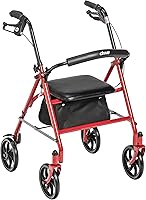
The Medline Steel Rollator Walker with Seat (B079PG3BR3) is the best Medline rollator walker with a seat for many buyers, with a 350 lb capacity, padded seat and backrest, and under-seat storage. That mix suits short walks, rests during errands, and everyday support at home.
Choose the superlight aluminum model for its 12.6 lb frame or the extra-wide bariatric model for a 23.5 in seat and 400 lb capacity. Those choices show how one brand can cover very different bodies and routines.
This roundup compares seven Medline models by frame, wheel size, seat fit, storage, and stated weight capacity. Each section explains what the numbers mean in daily use.
The right fit depends on the person using it and the spaces where it must move. Handle height, doorway width, and car storage space can matter as much as capacity.
If you lift the walker often, frame weight deserves early attention. If you sit for longer periods, seat width and backrest support deserve the same care.
If you walk mostly indoors, smaller wheels may be easy to manage through tight rooms. If you go outside often, larger wheels may feel steadier on paths and thresholds.
Steel, aluminum, standard, extra-wide, and adjustable models all appear here so you can see the trade-offs clearly. Some are built for lifting, some for room, and some for a balance of both.
Read the measurements for the person who will use the walker. A comfortable handle height helps hands reach the brakes without leaning forward.
A seat that is too high or too low can make sitting and standing harder. Storage also changes daily use, from a bag under the seat to a wire basket or front bag.
No single model wins for every home, route, and body type in this group. The sections that follow help you match the walker to the life around it.
Our picks at a glance
-
1
 Best for a 350 lb capacity
Medline Steel Rollator Walker with Seat
9.4/10 our score
See it on Amazon -
2
 Best for a lighter standard frame
Medline Aluminum Rollator Walker with Seat
9.3/10 our score
See it on Amazon -
3
 Best for a wider seat
Medline Large Extra Wide Aluminum Bariatric Rollator
9.1/10 our score
See it on Amazon
- 4
 Check it
Medline Superlight Folding Aluminum Mobility Rollator Walker
Best for the lightest frame - 5
 Check it
Medline Steel Rollator Walker with Seat
Best for 8 in wheels on steel - 6
 Check it
Medline Posh Premium Lightweight Aluminum Rollator Walker
Best for adjustable seating - 7
 Check it
Medline Aluminum Rollator Walker
Best for 8 in wheels on aluminum
Which Medline rollator walkers stand out?
The B079PG3BR3 is the highest-scoring Medline rollator walker here, with a 350 lb capacity, padded seat and backrest, and under-seat storage. The other models offer a lighter frame, a wider seat, or larger wheels for different needs.
Medline Steel Rollator Walker with Seat: Best for a 350 lb capacity
- 350 lb weight capacity
- 6 in wheels
- 12 x 12 in padded seat and backrest
- 16.5 lb frame
A padded seat and backrest, under-seat storage, and a 350 lb capacity make this steel model a balanced everyday pick. Its 16.5 lb frame folds for transport and storage.
Pros
- 350 lb capacity
- Padded seat and backrest
- Under-seat storage
Cons
- Heavier than the aluminum picks
- 6 in wheels
The Medline Steel Rollator Walker with Seat has a padded place to rest and a 350 lb capacity. Its 12 x 12 in seat and backrest are padded, and storage sits under the seat.
That seat size suits many adults who need brief rests rather than long sitting periods. A backrest helps when the user pauses and wants support behind them.
The frame weighs 16.5 lb and folds for transport and storage. Folding can help with a car trunk, a closet, or a hallway corner.
Its handles adjust from 31 to 35 in, and the 6 in wheels are designed for indoor and outdoor use. Check the handle setting against the user before the first walk.
The brake handles push up to brake and down to lock the wheels. Before sitting or standing, check that the wheels are locked and the rollator is positioned securely.
Locking matters most at the moment of transfer, when weight shifts onto the seat. A short pause to confirm the lock can make that step calmer.
Steel gives this model a sturdy feel for daily home use. The trade-off is that it is heavier than the aluminum options in this roundup.
Choose this model if you want a steel frame and its 350 lb capacity. Measure the user handle height and the places the rollator needs to pass through.
Medline Aluminum Rollator Walker with Seat: Best for a lighter standard frame
- 250 lb weight capacity
- 6 in wheels
- 12 x 12 in padded seat and backrest
- 14 lb frame
This aluminum option weighs 14 lb and has a padded seat and backrest with storage underneath. Its handles adjust from 31 to 35 in.
Pros
- 14 lb frame
- Padded seat and backrest
- Foldable frame
Cons
- 250 lb capacity
- 6 in wheels
The Medline Aluminum Rollator Walker with Seat weighs 14 lb, 2.5 lb less than the steel pick above. It has a 250 lb capacity, a 12 x 12 in padded seat and backrest, and storage underneath.
That lower weight can help when lifting the frame into a vehicle. It can also help when moving it in and out of storage each day.
The handles adjust from 31 to 35 in, the same range as the standard steel model. Its aluminum frame folds, and its 6 in wheels are designed for indoor and outdoor movement.
For many users, the familiar 12 x 12 in seat is enough for short rests. The padded backrest adds support when the walker is stopped for a pause.
This is the lighter standard option for buyers whose needs fit within the 250 lb capacity. Capacity should be checked with care, including the user and any items carried.
Under-seat storage helps keep essentials nearby without using the hands. The main trade-off is capacity, since this model supports less than the steel pick.
Choose it when the lighter frame matters more than the higher limit. Compare the capacity and weight with the best rollator walker for seniors guide for a broader look beyond Medline.
Medline Large Extra Wide Aluminum Bariatric Rollator: Best for a wider seat
- 400 lb weight capacity
- 23.5 in seat width
- 8 in wheels
- 19 lb frame
The extra-wide seat measures 23.5 in, and the rollator supports up to 400 lb. Its 8 in wheels and foldable aluminum frame suit buyers who want more room and larger wheels.
Pros
- 400 lb capacity
- 23.5 in seat width
- 8 in wheels
Cons
- 29 in overall width needs doorway checks
- 19 lb frame
The Medline Large Extra Wide Aluminum Bariatric Rollator is designed around a wider seating area and higher weight capacity. Its padded seat is 23.5 in wide, and its capacity is 400 lb.
That width can suit larger users who feel cramped on a standard seat. It also gives more room to sit comfortably during longer pauses.
This model also has 8 in wheels, a padded backrest, and storage beneath the seat. The aluminum frame folds and weighs 19 lb, and the handles adjust from 31.5 to 37.5 in.
The taller handle range can help taller users keep an upright posture. Check that the user can reach the brakes easily at the chosen height.
Its overall width is 29 in, so check doorways, hallways, and storage spots before buying. A wider frame needs clear space to turn and to pass through rooms.
Storage under the seat can hold essentials while the user walks or rests. Keep heavier items low and close to the center for steadier handling.
Pick it when the 23.5 in seat width and 400 lb capacity match the user needs. You can compare its space needs with other rollators in our complete walker for seniors guide.
Medline Superlight Folding Aluminum Mobility Rollator Walker: Best for the lightest frame
- 12.6 lb frame
- 250 lb weight capacity
- Adjustable 12 x 12 in seat
- 6 in wheels
At 12.6 lb, this is the lightest frame among these picks. Both the seat and handles adjust, giving buyers more fit options than the standard aluminum model.
Pros
- Lightest frame here
- Seat height adjusts from 18 to 23 in
- Under-seat storage
Cons
- 250 lb capacity
- 6 in wheels
The Medline Superlight Folding Aluminum Mobility Rollator Walker weighs 12.6 lb, the lowest frame weight in this group. It supports up to 250 lb and includes a padded 12 x 12 in seat with a height that adjusts from 18 to 23 in.
That low weight can suit users who need help lifting or carrying the walker. It can also suit homes where the walker is stored away after each outing.
Its handles adjust from 29.5 to 36 in, a wider range than the standard aluminum model. The frame folds, and storage sits under the seat.
The lower starting point for the handles can help shorter users. The extended range can also help taller users find a more comfortable grip.
An adjustable seat height lets the user match the seat to their lower body and standing height. That fit can affect how easily they sit down and stand up again.
This may suit someone who needs the rollator lifted or stored often, as long as the seat and capacity fit. The 6 in wheels are smaller than those on Medline 8 in wheel choices.
Smaller wheels may be fine for smooth indoor floors and short outdoor paths. Check thresholds and rough ground if the walker will travel outside each day.
Check both the seat height and handle range against the user before choosing. Those measurements can affect comfort and how easily the user can reach the hand brakes.
Medline Steel Rollator Walker with Seat: Best for 8 in wheels on steel
- 300 lb weight capacity
- 8 in wheels
- 12 x 12 in padded seat and backrest
- 17 lb frame
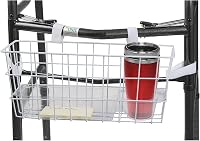
This steel model pairs 8 in wheels with a padded seat and a removable wire basket. The backrest flips up to make more room when needed.
Pros
- 8 in wheels
- Removable wire basket
- Backrest flips up
Cons
- 17 lb frame
- 300 lb capacity
The Medline Steel Rollator Walker with Seat in blue pairs a steel frame with 8 in wheels and a 300 lb capacity. Its padded seat measures 12 x 12 in, and the backrest flips up for more room.
Flipping the backrest up can help when the user wants more space to sit or stretch. It also gives another option when the backrest is not needed.
A removable wire basket provides storage, and the frame folds for transport and storage. The frame weighs 17 lb, and the handles adjust from 31 to 36 in.
A basket can be handy for items that should stay visible and easy to reach. It can also be removed when cleaning or when the walker is stored.
The 8 in wheels may suit outings on paths, driveways, and uneven ground. Larger wheels can roll over small changes in surface with less effort.
This is a comparison with the burgundy steel model for buyers who prefer larger wheels and a removable basket. Its capacity is 50 lb lower, so compare that figure with the user needs.
Steel construction may feel solid for regular use at home. The trade-off is the heavier frame when lifting into a car or storing it away.
Consider this option if the 8 in wheels and basket are priorities. Measure the route and storage space, since wheel size alone does not determine whether a rollator will fit through a home.
Medline Posh Premium Lightweight Aluminum Rollator Walker: Best for adjustable seating
- 14.75 lb frame
- 250 lb weight capacity
- 14.4 x 12 in seat
- Attached front bag
The Posh has an adjustable seat and handles, plus an extra bag that attaches to the front. Its pink frame has zebra accent details.
Pros
- Adjustable seat and handles
- Attached front bag
- 14.75 lb frame
Cons
- 250 lb capacity
- 6 in wheels
The Medline Posh Premium Lightweight Aluminum Rollator Walker has an adjustable padded seat measuring 14.4 x 12 in. Its seat height adjusts from 19.5 to 23.5 in, and the handles adjust from 30 to 36 in.
That seat adjustment gives more fit options than a fixed seat height. It can help the user sit with feet more level on the floor.
The frame weighs 14.75 lb and supports up to 250 lb. It has under-seat storage and an additional bag that attaches to the front.
A front bag can keep smaller items within easy reach while walking. Under-seat storage can hold other essentials that are not needed as often.
The pink aluminum frame has zebra accent details. The color may appeal to users who want a walker that feels more personal.
Its 6 in wheels and seat-height range are worth comparing with the user needs. Check the route, since smaller wheels may handle rough ground differently.
Adjustable handles from 30 to 36 in can suit a range of heights. Set them so the arms stay relaxed and the hands can reach the brakes.
Choose it if the adjustable seat and attached front bag matter to you. If frame weight is your main concern, the 12.6 lb superlight model weighs less.
Medline Aluminum Rollator Walker: Best for 8 in wheels on aluminum
- 300 lb weight capacity
- 8 in wheels
- 12 x 12 in padded seat and backrest
- 14 lb frame
This aluminum model weighs 14 lb, supports up to 300 lb, and has 8 in wheels. Its padded seat and under-seat storage provide a place to rest and carry essentials.
Pros
- 8 in wheels
- 300 lb capacity
- 14 lb frame
Cons
- Seat height is 20.5 in
- Handle height adjusts from 31 to 35.75 in
The Medline Aluminum Rollator Walker weighs 14 lb and supports up to 300 lb. It has 8 in wheels, a padded 12 x 12 in seat, a cushioned backrest, and under-seat storage.
That combination pairs a lighter aluminum frame with larger wheels. It can suit users who walk outdoors and still want a frame that is easier to lift.
Its seat sits 20.5 in above the floor, and the handles adjust from 31 to 35.75 in. The frame folds flat for storage or transport.
A fixed seat height is simpler to set up and to remember. It also means the user cannot change the seat height as needs shift over time.
The cushioned backrest can help during rests after a walk or errand. Under-seat storage keeps essentials close when the walker is stopped.
This model combines a 300 lb capacity with an aluminum frame and 8 in wheels. Check its fixed seat height against the user needs.
The 8 in wheels may be helpful on paths and outdoor surfaces. They also need room to turn in tighter indoor spaces.
Choose it if you want 8 in wheels, a 300 lb capacity, and a 14 lb aluminum frame. Confirm that the seat and handle measurements suit the intended user.
How do Medline rollators compare by frame and capacity?
The B079PG3BR3 steel rollator has the highest score and a 350 lb capacity, while the B00B8F1H9O aluminum model weighs 14 lb and supports up to 250 lb. The B000LU5JKK bariatric model has the highest capacity and widest seat in this group.
| Product | Best for | Frame | Weight capacity | Wheel size | Our score |
|---|---|---|---|---|---|
| Medline Steel Rollator Walker with Seat | a 350 lb capacity | Steel | 350 lb | 6 in | 9.4 |
| Medline Aluminum Rollator Walker with Seat | a lighter standard frame | Aluminum | 250 lb | 6 in | 9.3 |
| Medline Large Extra Wide Aluminum Bariatric Rollator | a wider seat | Aluminum | 400 lb | 9.1 | |
| Medline Superlight Folding Aluminum Mobility Rollator Walker | the lightest frame | Aluminum | 9.0 | ||
| Medline Steel Rollator Walker with Seat | 8 in wheels on steel | Steel | 300 lb | 8 in | 8.8 |
| Medline Posh Premium Lightweight Aluminum Rollator Walker | adjustable seating | Aluminum | 250 lb | 8.7 | |
| Medline Aluminum Rollator Walker | 8 in wheels on aluminum | Aluminum | 300 lb | 8 in | 8.6 |
The steel models weigh 16.5 lb and 17 lb, while the listed aluminum models range from 12.6 lb to 19 lb. Compare the stated weight for each model rather than assuming every aluminum rollator weighs less than every steel one.
Frame material alone does not tell the full story about weight. Seat width, wheel size, and extra features can change the total.
The lightest aluminum model here is the superlight frame at 12.6 lb. The bariatric aluminum model is heavier at 19 lb because of its wider design.
The steel steel models sit in the middle for weight in this group. Their capacity and wheel choices differ, so weight should not be the only comparison.
Weight capacity ranges from 250 lb to 400 lb across these seven picks. That range can guide which model fits the user safely.
A higher capacity does not always mean a better daily fit. Seat width, handle height, and doorway space still need checking.
For some users, a lighter frame matters more than the highest capacity. For others, room and capacity matter more than lifting ease.
Look at frame weight together with folding size and storage space. A walker that cannot fit the car or closet will be harder to use.
Weight capacity is one fit check, along with the user measurements and needs. A mobility professional can help assess which mobility aid fits a person movement needs.
Should you choose 6 in or 8 in wheels?
Medline's 8 in wheel models include the extra-wide aluminum bariatric rollator, the blue steel rollator, and the standard aluminum rollator. The other four models have 6 in wheels.
The 8 in wheel models may suit buyers comparing wheel size, while the 6 in options include the lightest frames in this roundup. Compare wheel size with the route, turning space, and storage needs.
Medline describes these wheels for indoor and outdoor movement. Consider the thresholds, flooring, and paths where the rollator will be used.
If you're comparing a different walking aid, read our guide to U-Step walker vs rollator before choosing between styles. A rollator has wheels and a seat, while a U-Step walker has a different design.
What should you measure before choosing a Medline rollator?
Measure the user and the home before choosing a Medline rollator. Handle height, seat height and width, overall rollator width, and storage space can help you assess fit.
Check whether the handles adjust to a comfortable height. The standard steel and aluminum models adjust from 31 to 35 in, while the superlight model starts at 29.5 in and the bariatric model reaches 37.5 in.
Seat measurements vary as well. The extra-wide model has a 23.5 in seat, most others have a 12 x 12 in seat, and the Posh model measures 14.4 x 12 in.
Measure doorways and tight turns, especially for the 29 in wide bariatric rollator. Also check whether a folded frame will fit the car trunk, closet, or other planned storage area.
How do Medline rollator seats, brakes, and storage differ?
All seven picks include a seat. The superlight and Posh models have adjustable seat height, the bariatric model has a 23.5 in wide seat, and most of the others have a 12 x 12 in seat.
Seat height affects how the user sits and stands. A seat that is too high can make standing harder for shorter users.
Seat width affects comfort during a rest. A wider seat can suit larger users or those who want more room to sit.
The blue steel model has a removable wire basket, while the Posh model adds a front bag. The other models have under-seat storage.
Each storage style suits different habits and items. A basket is open and visible, while a bag can keep small items more contained.
Under-seat storage keeps items low and out of the walking path. It can be useful for essentials that do not need constant access.
The described brake handles push up to brake and down to lock the wheels. Practice using the brakes and check that the wheels are locked before sitting or standing.
Brake practice should happen in a safe, open space first. Learn the feel of the handles before using the walker on a daily route.
Compare the storage options with what you plan to carry. Check weight limits for carried items as well as the user.
What should you know about Medline rollator costs?
Medline rollator costs can vary by frame, seat design, wheel size, and features. A wider seat, larger wheels, or adjustable parts can change the value of one model compared with another.
See our guide to rollator walker prices for factors that can affect the total. That guide can help you see which features often drive cost.
Think about the cost in relation to daily use, not only the first purchase. A walker used every day may justify choosing the seat, frame, or wheels that fit best.
Compare current offers when you are ready to buy. Prices and availability can change, so check the listing details before you decide.
Match the rollator measurements and capacity to your needs, then weigh the cost against the features that matter for daily use. A lower price helps little if the seat or handles do not fit.
It also helps to look at what is included and what may need care over time. Folding, storage, and brake use all affect long term value.
For some buyers, the lightest frame is worth the priority. For others, a wider seat or larger wheels may matter more.
Use the cost as one part of a full fit check. The best value is the walker that suits the user, the route, and the home.
Which Medline rollator walker should you choose?
Choose the B079PG3BR3 for a 350 lb capacity and padded seat, the B002HF3KPI for a 12.6 lb frame, or the B000LU5JKK for a 23.5 in seat and 400 lb capacity. The best Medline rollator walker with a seat is one that fits the user, route, and storage space.
If you want larger wheels with steel, look at the blue steel model with 8 in wheels. If you want larger wheels with aluminum, look at the black aluminum model with a 300 lb capacity.
If seat height adjustment matters, compare the superlight model and the Posh model. Their seat ranges can help different users sit and stand with more comfort.
If storage style matters, compare under-seat storage with a wire basket and a front bag. The right choice depends on what you carry and how often you reach for it.
Measure handle height before you choose any model in this roundup. The range differs by model, and a good fit helps the user reach the brakes.
Measure doorways, hallways, and turning space at home. That step is especially important for the extra-wide bariatric model at 29 in overall width.
Check folded storage in the car, closet, or entry area. A walker that fits the routine is easier to use every day.
For options across brands, compare our best rollator walkers for seniors roundup. If you are also considering a mobility scooter seat or cushion, see our guides to Best Mobility Scooter Replacement Seat and Best Mobility Scooter Seat Cushion.
Our score weighs specs, features, and buyer feedback against what you are shopping for. Use it as a starting point, then check the measurements that matter most to you.
Take time to practice the brakes and the folding routine after it arrives. When in doubt, start with capacity, seat fit, and space needs.
Choose the model that matches the user, the home, and the routes ahead. The right Medline rollator should support daily life without adding extra strain.
Our top 3 picks at a glance
-
1
Best for a 350 lb capacity
Medline Steel Rollator Walker with Seat
9.4/10 our score
See it on Amazon -
2
Best for a lighter standard frame
Medline Aluminum Rollator Walker with Seat
9.3/10 our score
See it on Amazon -
3
Best for a wider seat
Medline Large Extra Wide Aluminum Bariatric Rollator
9.1/10 our score
See it on Amazon
Frequently asked questions
Which Medline rollator walker is best for most people?
The Medline Steel Rollator Walker with Seat (B079PG3BR3) is a balanced choice for buyers who want a padded seat, under-seat storage, and a 350 lb capacity. It weighs 16.5 lb and has 6 in wheels.
Compare the capacity and frame weight with your needs before choosing.
Which Medline rollator is the lightest?
The Medline Superlight Folding Aluminum Mobility Rollator Walker weighs 12.6 lb, the lowest frame weight among these seven picks. It has a 250 lb capacity, 6 in wheels, and an adjustable seat.
Check the seat and handle ranges against the user's fit.
Which Medline rollator has the widest seat?
The Medline Large Extra Wide Aluminum Bariatric Rollator has a 23.5 in wide seat and a 400 lb capacity. Its overall width is 29 in, so measure doorways and storage spaces before choosing it.
Its handles adjust from 31.5 to 37.5 in.
Are 8 in wheels better than 6 in wheels on a rollator?
Wheel size is one factor to compare, alongside frame weight, width, capacity, and where you plan to use the rollator. Medline's 8 in wheel models include steel and aluminum options, while several lighter frames have 6 in wheels.
Compare the wheel size with the routes and spaces where the rollator will be used.
How do I choose a Medline rollator with a seat?
Start with the user's weight capacity, handle height, seat height and width, and the rollator's overall width. Then compare frame weight, wheel size, folding, and storage.
Our walker for seniors buying guide covers the measurements and features to check.