9 Best Non-Slip Mats for Wheelchair Ramps (November 2026)
The best non-slip wheelchair ramp surfaces include the FACHNUO 2FT Portable Wheelchair Ramp for Home for portable access, the VEVOR Rubber Threshold Ramp for broad low thresholds, and the VEVOR 3" Rise Rubber Threshold Ramp for taller doorways.
On this page (6 sections)
- Which best wheelchair ramp mat options suit different entrances?
- Best wheelchair ramp mats for portable and doorway access
- How do you choose the right wheelchair ramp mat?
- How do you set up and care for a wheelchair ramp mat?
- What common mistakes make a ramp harder to use?
- Which wheelchair ramp mat should you choose?
The best wheelchair ramp mat for a wet doorway is a fitted ramp with a textured surface and drainage, not a loose mat that can shift under wheels. FACHNUO is the portable pick, while rubber ramps cover shallow sills and higher doorway transitions.
This guide focuses on ramp surfaces that bridge a measured rise. Before choosing one, measure the threshold, width and approach space, then check the mobility device's slope guidance and the door's swing.
For broader access planning, see our stair lift options and ramp guide. If your threshold has an abrupt edge, compare wheelchair ramp transition plates and our mobility scooter ramp guide.
Our picks at a glance
-
1
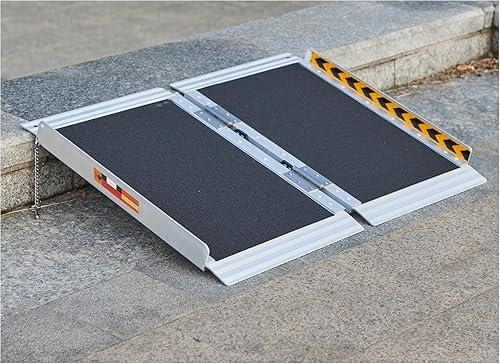 Best for portable access
FACHNUO 2FT Portable Wheelchair Ramp for Home
9.6/10 our score
See it on Amazon -
2

-
3
- 4
 Check it
OranclUS Rubber Wheelchair Threshold Ramp
Best for varied entrance heights - 5
 Check it
Nuvium 1" Rise Rubber Threshold Ramp
Best for shallow sills - 6
 Check it
Silver Spring Rubber 3-Channel Threshold Ramp
Best for doorway cables - 7
 Check it
BESEA 3" Rubber Threshold Ramp for Wheelchairs
Best for level approaches - 8
 Check it
Silver Spring Solid Rubber Threshold Ramp
Best for wide approaches - 9
 Check it
Electriduct 1.6" Non Slip Rubber Threshold Wheelchair
Best for mid-height sills
Which best wheelchair ramp mat options suit different entrances?
The best choices are ramps with textured or grooved surfaces, matched to a specific rise and entryway. We compared dimensions, material and fit details such as drainage, portability and cable routing.
A textured surface adds grip, but it cannot make a steep or poorly placed ramp suitable. Measure first, then check that the wheelchair or scooter can manage the approach.
| Product | Best for | Material | Ramp size | Rise guidance | Our score |
|---|---|---|---|---|---|
| FACHNUO 2FT Portable Wheelchair Ramp for Home | portable access | Aluminum | 24 x 29.2 x 2 in unfolded | 2–6 in; wheelchair step height recommended not to exceed 4 in | 9.6 |
| VEVOR Rubber Threshold Ramp | broad low thresholds | Rubber | 43.7 x 16 x 2 in | 9.6 | |
| VEVOR 3" Rise Rubber Threshold Ramp | taller doorways | Rubber | 35.5 x 17.7 x 3 in | 9.5 | |
| OranclUS Rubber Wheelchair Threshold Ramp | varied entrance heights | Rubber | 35.6 x 16.2 x 2 in | 9.4 | |
| Nuvium 1" Rise Rubber Threshold Ramp | shallow sills | Rubber | 35.5 x 5.3 x 1 in | 9.4 | |
| Silver Spring Rubber 3-Channel Threshold Ramp | doorway cables | Rubber | 24 x 42 x 3 in | 8.9 | |
| BESEA 3" Rubber Threshold Ramp for Wheelchairs | level approaches | Rubber | 35.5 x 18.1 x 3 in | 8.5 | |
| Silver Spring Solid Rubber Threshold Ramp | wide approaches | Rubber | 43.5 x 16.5 x 2.5 in | 7.6 | |
| Electriduct 1.6" Non Slip Rubber Threshold Wheelchair | mid-height sills | Rubber | 40 x 16 x 1.6 in | 7.5 |
Best wheelchair ramp mats for portable and doorway access
These picks cover portable access, low sills and higher doorway transitions. Choose by rise and placement first, then compare handling and surface features.
FACHNUO 2FT Portable Wheelchair Ramp for Home: Best for portable access
- Textured non-slip aluminum
- Folds with carrying handle
- 2 ft ramp
A folding aluminum ramp with a textured surface suits temporary access where you need to carry and store the ramp. Check the step height, wheelbase limit and door clearance before use.
Pros
- Folds for carrying and storage
- Textured surface and reflective strips
- Guide rails at both ends
Cons
- Wheelbase must not exceed 27 in
- Door or sliding door clearance can be affected
FACHNUO suits temporary access where you need to fold and carry the ramp between uses. It unfolds to 24 x 29.2 in and has a textured aluminum surface, reflective strips and extended guide rails at both ends.
The height guidance covers 2 to 6 in, with a recommendation that a wheelchair step height not exceed 4 in. For stable use, the front extension plate should sit fully flush with the ground.
Check the wheelbase before choosing it: it must not exceed 27 in. The vertical side walls and extension plate can affect door operation, and the plate may obstruct a sliding door track if there is not enough room.
Choose it for a portable ramp over a compatible step, not as a loose cover over an existing ramp. Skip it if you need a permanent, wide threshold platform or if the device wheelbase exceeds the limit.
VEVOR Rubber Threshold Ramp: Best for broad low thresholds
- Textured non-slip surface
- 2 in rise
- Drainage groove
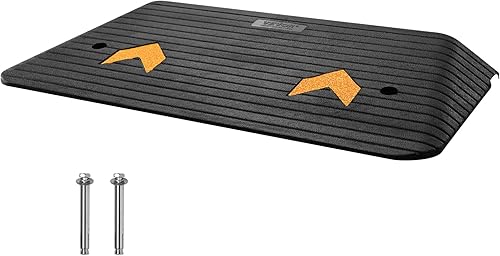
This broad rubber threshold ramp has a textured surface and a base groove. Its 2 in rise suits a low transition when the ramp footprint fits the doorway.
Pros
- Textured top increases friction
- Base groove lets water pass
- 43.7 in long
Cons
- Weighs 25 lb
- Rubber may have a slight smell
VEVOR's rubber threshold ramp suits a broad, low entrance with a 2 in rise. The 43.7 in long surface has a non-slip texture, while a groove at the base is designed to let water, wires and cables pass.
The ramp weighs 25 lb, so plan its placement before lifting it into position. Its rubber construction is described for all-weather use, though new rubber may have a slight smell.
Measure the threshold and available floor depth, then check the door clearance. A broad ramp can cover an opening, but width alone does not confirm that the rise or slope suits a particular chair.
Choose this for a firm doorway where its 2 in rise fits. Skip it if you need to move the ramp often or have a very shallow sill.
VEVOR 3" Rise Rubber Threshold Ramp: Best for taller doorways
- Grooved tread
- Beveled edges
- One-piece rubber design
The 3 in rise and beveled edges suit a doorway transition where a higher threshold needs a gradual approach. Measure the opening and check the device's slope limits.
Pros
- Grooved tread helps add traction
- Beveled edges allow approach from multiple sides
- No tools needed to assemble
Cons
- Weighs 29 lb
- Rubber may have a slight smell
This VEVOR model fits a 3 in rise and has beveled edges for an approach from multiple sides. The grooved tread adds texture, and the solid rubber construction is intended for indoor or outdoor use.
Its footprint is 35.5 x 17.7 in, so compare the doorway width and room in front of it. At 29 lb, it may be less convenient to reposition frequently than a folding ramp.
The rise is the main deciding factor. Confirm that the wheelchair or scooter can use the resulting slope and that the ramp does not block the door.
Choose it when a doorway needs a 3 in transition and the footprint fits. Skip it for a lower sill or where the device requires a longer approach.
OranclUS Rubber Wheelchair Threshold Ramp: Best for varied entrance heights
- 2 in rise option
- Textured non-slip surface
- Rubber construction
This 2 in version belongs to a range with several rise options. Its textured surface and doorway use make it a candidate when the measured threshold matches the selected height.
Pros
- Textured surface
- No tools or permanent installation required
- Rise options include 1–4 in
Cons
- This version is 2 in high
- Weighs 20 lb
OranclUS offers several rise choices, and this version is 2 in high. Its rubber surface is textured, and the ramp is designed for doorways, curbs and uneven surfaces.
The footprint is 35.6 x 16.2 in, a specific size to compare with your threshold and approach area. It can be placed and moved without tools or permanent installation.
Confirm the chosen height and check that the slope works for the device using it.
Choose this when a 2 in rubber threshold ramp matches your measurement. Skip this version if your threshold needs a different rise or a much longer approach.
Nuvium 1" Rise Rubber Threshold Ramp: Best for shallow sills
- 1 in rise
- Deep grooved surface
- Can be cut to fit
The shallow 1 in rise and grooved top fit a low sill. The 35.5 in width can be trimmed, and adhesive strips are included to help reduce shifting on clean, dry, smooth floors.
Pros
- Grooves add traction in wet or dry conditions
- Can be cut to fit narrower openings
- Adhesive strips included
Cons
- Only a 1 in rise
- Check flooring for possible color transfer
Nuvium is the shallowest option here, with a 1 in rise and deep grooves on top. Its 35.5 in width can be trimmed for a narrower opening, and multiple pieces can sit side by side for a wider one.
Included double-sided adhesive strips are intended to help reduce shifting on clean, dry, smooth floors. Check whether the floor material could absorb color before use, including vinyl and plastic flooring.
The ramp is only 5.3 in deep, so confirm that this short approach suits the user and mobility device. Its grooves are described for traction in wet and dry conditions, but water still needs a clear path away.
Choose it for a low sill where a 1 in rise is enough. Skip it for a large step or any situation that needs a long gradual ramp.
Silver Spring Rubber 3-Channel Threshold Ramp: Best for doorway cables
- 3 cable channels underneath
- Grooved rubber texture
- 3 in rise
Three underside channels can route hoses, cables or small wires across an entryway. Check that the 3 in rise and 600 lb capacity suit your setup.
Pros
- Three underside channels
- Textured surface
- For indoor or outdoor use
Cons
- 600 lb capacity
- 3 in rise may not fit a low threshold
Silver Spring's 3-channel ramp has a 3 in rise and channels underneath for hoses, cables or small wires. Its grooved rubber surface is described for indoor and outdoor use.
The ramp measures 24 in long by 42 in wide, and its stated capacity is 600 lb. Check the combined load of the user and mobility device before choosing it.
The channels can help keep small lines off the top surface, provided their path matches your doorway layout. The ramp still needs firm placement and a slope the device can manage.
Choose it when cable routing is part of the doorway setup and the rise, capacity and width fit. Skip it if the combined load is too close to or above its limit.
BESEA 3" Rubber Threshold Ramp for Wheelchairs: Best for level approaches
- Textured anti-slip surface
- 3 in rise
- 35.5 in length
A 3 in rise and textured surface suit some home thresholds. The substantial rubber construction is intended to help reduce shifting on firm, level ground.
Pros
- Textured surface for wheels and footwear
- Sized for doorways
- No permanent installation required
Cons
- Weighs 28 lb
- Needs firm, level placement
BESEA's 3 in model has a textured top and a 35.5 x 18.1 in footprint. It weighs 28 lb, so it is better suited to a planned placement than frequent carrying.
Its substantial rubber construction is intended to help reduce shifting on firm, level ground. Measure the available floor space and check the door swing before setting it at an entrance.
Check the mobility device's slope limits as well. A high load capacity does not tell you whether the rise is suitable for a particular chair or scooter.
Choose it for a 3 in threshold on a firm, level approach. Skip it if the base would sit on loose, uneven or sloped ground.
Silver Spring Solid Rubber Threshold Ramp: Best for wide approaches
- 43.5 in wide
- 2.5 in rise
- Drainage channels
The wide platform and beveled sides allow a broad approach to a 2.5 in rise. Built-in drainage channels help move water away from the textured surface.
Pros
- Wide 43.5 in platform
- Beveled sides allow approach from different directions
- Drainage channels
Cons
- 2.5 in rise may be too high for some doorways
- Check door operation and floor space
Silver Spring's solid rubber ramp has a 2.5 in rise and a 43.5 in wide platform. Beveled sides allow approach from different directions, and built-in drainage channels help move water across the ramp.
That width can suit a wider entrance, but check the floor depth and door operation before placing it. Compare the 1,500 lb capacity with the combined user and device load.
The textured surface and drainage features make it relevant for outdoor thresholds where water can reach the approach. Keep the channels clear so they can drain.
Choose it when the wider platform and 2.5 in rise match the entrance. Skip it if a wide ramp blocks the doorway or the threshold is much lower.
Electriduct 1.6" Non Slip Rubber Threshold Wheelchair: Best for mid-height sills
- Linear grooves
- 1.6 in rise
- Voided bottom
The 1.6 in rise and linear grooves suit a shallow transition. Its voided bottom is designed to flex and contour to the surface without bolts or adhesive.
Pros
- Grooved top adds grip
- No bolts or adhesive needed
- Indoor and outdoor use
Cons
- New rubber can smell
- Load capacity is stated as a range
Electriduct's ramp has a 1.6 in rise, a grooved top and a voided bottom designed to flex and contour to the surface. The 40 x 16 in footprint works for some shallow transitions, subject to doorway and slope checks.
It is designed for tool-free placement without bolts or adhesive. New rubber can have an odor that dissipates over time; airing the ramp outside before indoor placement can help.
Its load capacity is given as a range, so confirm the applicable limit for your use. The grooves add texture, but correct placement and a suitable approach remain essential.
Choose it for a 1.6 in transition where a 40 in wide ramp fits. Skip it if you need a clearly stated single load limit or a different rise.
How do you choose the right wheelchair ramp mat?
Choose a ramp by measuring the rise first, then confirm the slope, width, depth and door clearance. A ramp that fits the opening can still be unsuitable if it is too steep for the wheelchair or scooter.
What measurements matter for the best wheelchair ramp mat?
Measure the vertical distance from the lower floor to the threshold, not the ramp’s outside dimensions. Then measure the clear opening, the floor space available in front of the doorway, and the door swing or sliding track.
Check the mobility device’s wheelbase and slope guidance. FACHNUO has a 27 in wheelbase limit, while each other ramp also needs a suitable width and approach.
Consider the route from both sides. A doorway may have a different floor height inside and outside, and a ramp that works on one side may obstruct a door or create a new lip on the other.
How should you compare ramp material and surface?
Rubber threshold ramps are one-piece options that sit at the entrance, while FACHNUO folds for carrying and storage. Textured and grooved tops add surface detail, and some rubber models have drainage channels or a base groove.
For outdoor use, choose placement that lets water drain and keeps the ramp on firm, level ground. Clear leaves, mud and ice from the approach.
When should you choose a different ramp style?
A short threshold ramp is for a small rise at a doorway or curb. If you need to cover several steps or bridge a longer height difference, compare portable wheelchair ramps for 2 to 6 steps instead of using a threshold ramp beyond its intended role.
If you are planning a larger home access project, our guide to ramps, lifts and stairlifts explains how the options differ. For a separate mobility scooter setup, see how much a mobility scooter ramp costs before deciding between ramp types.
How do you set up and care for a wheelchair ramp mat?
Set the ramp on a clean, firm surface, check that it sits flat, and confirm doors can open before anyone uses it. Follow the ramp’s placement instructions and recheck position after moving it or after severe weather.
What should you check before first use?
Clear loose dirt, cords and objects from the approach. Position the ramp squarely at the threshold and check that its edge does not rock, lift or create a gap where a wheel could catch.
For FACHNUO, make sure the front extension plate is fully flush with the ground. For rubber ramps, use a firm, level surface; Nuvium's adhesive strips are intended for clean, dry, smooth floors.
Check the door at its full swing and ensure a sliding door track remains usable. With a helper present, move across slowly and confirm the wheels stay within the ramp edges before regular use.
How should you keep the surface in usable condition?
Sweep or wipe away grit, leaves and mud that can reduce traction. Keep drainage grooves and channels free of debris so water has a path away from the wheels.
After rain, freezing weather or a move, inspect the ramp’s position and the ground beneath it. If a rubber ramp arrives curved or has a noticeable odor, allow it to lie flat and air out in a ventilated area before placing it indoors.
Avoid adding a loose mat or covering that can bunch over the ramp. If you use a surface treatment or adhesive, make sure it is compatible with the floor and does not cover drainage paths.
What common mistakes make a ramp harder to use?
The most common mistakes are choosing by capacity alone, underestimating the slope and overlooking door clearance. A strong ramp still needs a suitable rise, footprint and stable placement.
Do not assume the ramp's maximum height guidance means every mobility device can use that slope. Check the device instructions and seek an access professional's advice if you cannot confirm a safe route.
Do not assume that all rubber ramps are easy to move. Several weigh around 20 to 29 lb, while a folding ramp has limits on step height, wheelbase and door clearance.
Avoid placing a ramp on soft, uneven ground or where water pools. If the ramp shifts, rocks or leaves a gap during careful initial use, stop and correct the placement before relying on it.
Which wheelchair ramp mat should you choose?
Choose FACHNUO if you need portable access and its rise, wheelbase and door clearances fit. Pick Nuvium for a 1 in sill, VEVOR's 2 in model for a broad low threshold, or one of the 3 in ramps only when the measured rise and device guidance allow it.
For a wet entrance, prioritize a stable textured surface, drainage and a suitable slope. The best wheelchair ramp mat is the one that matches the threshold and remains secure along the route you need every day.
Our top 3 picks at a glance
-
1
Best for portable access
FACHNUO 2FT Portable Wheelchair Ramp for Home
9.6/10 our score
See it on Amazon -
2
-
3
Frequently asked questions
Do non-slip mats work on wheelchair ramps?
A non-slip surface can add texture, but it must stay flat and secure under the chair. Loose mats can bunch, shift or catch wheels, so choose a ramp or surface made for the measured rise and mobility device.
Follow the placement instructions and check the route carefully before regular use.
What is the best surface for a wheelchair ramp in the rain?
Choose a ramp with a textured or grooved top and a way for water to drain. Rubber threshold ramps in this guide have textured surfaces, and some include drainage channels or grooves.
Keep the approach clear of leaves, ice and standing water, and check the surface after rain.
How do I choose the right wheelchair ramp mat size?
Measure the vertical rise, available floor depth and clear doorway width before choosing a ramp. Check door swing, wheelbase and the slope limits for the wheelchair or scooter.
A ramp that fits the doorway can still be too steep or interfere with a door.
Can I use a rubber threshold ramp outdoors?
Several rubber ramps here are described for indoor and outdoor use. For outdoor placement, check that the ramp sits on a firm, level base and that water can drain rather than collect beneath or around it.
Inspect it after weather changes because debris, ice or movement can affect the route.


