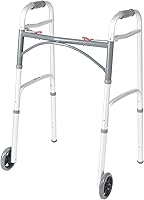
9 Best Walkers for Knee Replacement (November 2026)
The best walkers for knee replacement recovery include the VOCIC Z21 Rollator Walker for Seniors for adjustable seat and handles, the Drive Medical Rollator Walker with Seat for a padded rest seat, and the Medline Steel Rollator Walker with Seat for a lighter steel rollator.
On this page (6 sections)
The best walker for knee replacement recovery is the one your surgeon or physical therapist recommends for your balance and weight-bearing instructions. A standard walker gives you a fixed frame to hold, while a rollator moves on wheels and needs brake control.
Your needs can change as recovery progresses. Use the device and walking pattern your care team has shown you, and ask before switching from a standard walker to a rollator.
This roundup compares wheeled and non-wheeled options by frame style, adjustment features, seat, and stated capacity. If you need a wider overview of choosing a walker for seniors, start with our complete guide.
Our picks at a glance
-
1
 Best for adjustable seat and handles
VOCIC Z21 Rollator Walker for Seniors
9.6/10 our score
See it on Amazon -
2
 Best for a padded rest seat
Drive Medical Rollator Walker with Seat
9.5/10 our score
See it on Amazon -
3
 Best for a lighter steel rollator
Medline Steel Rollator Walker with Seat
9.4/10 our score
See it on Amazon
- 4
 Check it
Drive Medical 2-Button Standard Foldable Walker
Best for a fixed, non-wheeled frame - 5
 Check it
VOCIC Z11 Standard Rollator Walker for Seniors
Best for a broad handle-height range - 6
 Check it
Medline Lightweight Two Button Folding Walker
Best for a lightweight folding frame - 7
 Check it
Loyoda Folding Walker with 2 Skis
Best for interchangeable glides - 8
 Check it
Medical king Walkers for Seniors Aluminum Lightweight Walker
Best for a rolling frame with a stated capacity - 9
 Check it
Loyoda Folding Walkers for Seniors Adjustable Aluminum
Best for adjustable width
Which walker features matter after knee replacement?
Choose walker features that match your care plan, fit your body, and work in your home. A seat, wheels, or folding frame can affect how the walker moves and how you use it.
A standard walker stays in place while you advance it step by step. A rollator rolls continuously and has brakes, so it requires you to manage the brakes reliably.
Check the handle height range and frame width against your posture and doorways. For a rollator, also consider seat height, wheel size, brake style, and whether you can control it safely when stopping or sitting.
Carpet can slow small wheels and make a frame harder to move. Our guide to the best walker for seniors on carpet covers surface and wheel considerations.
A safest walker for seniors is not one universal model. Ask a clinician to help fit a walker to your needs and explain how to use it.
How we compared these walkers for knee replacement
We compared the frame styles, wheel arrangements, seat features, adjustment ranges, folding details, and stated weight capacities. Our score weighs specs and features against what you need from a walker after surgery.
Product features cannot determine whether a model suits your procedure or stage of recovery. Ask your care team to confirm the walker type, fit, and walking technique before use.
| Product | Best for | Wheel size | Seat height | Weight capacity | Our score |
|---|---|---|---|---|---|
| VOCIC Z21 Rollator Walker for Seniors | adjustable seat and handles | 8 in | 20–22 in | 350 lb | 9.6 |
| Drive Medical Rollator Walker with Seat | a padded rest seat | 7.5 in | 9.5 | ||
| Medline Steel Rollator Walker with Seat | a lighter steel rollator | 350 lb | 9.4 | ||
| Drive Medical 2-Button Standard Foldable Walker | a fixed, non-wheeled frame | 350 lb | 9.3 | ||
| VOCIC Z11 Standard Rollator Walker for Seniors | a broad handle-height range | 380 lb | 9.3 | ||
| Medline Lightweight Two Button Folding Walker | a lightweight folding frame | 300 lb | 8.8 | ||
| Loyoda Folding Walker with 2 Skis | interchangeable glides | 8.5 | |||
| Medical king Walkers for Seniors Aluminum Lightweight Walker | a rolling frame with a stated capacity | Up to 350 lb | 8.4 | ||
| Loyoda Folding Walkers for Seniors Adjustable Aluminum | adjustable width | 350 lb | 8.3 |
Best walkers for knee replacement recovery
The highest-scoring picks are the VOCIC Z21, Drive Medical Rollator, and Medline Steel Rollator. This roundup also includes standard walkers, since recovery needs and care plans differ.
VOCIC Z21 Rollator Walker for Seniors: Best for adjustable seat and handles
- 8 in wheels
- Seat adjusts from 20 to 22 in
- Handles adjust from 31.5 to 36.6 in
- Supports up to 350 lb
The Z21 combines a seat with height-adjustable handles and larger wheels. Its rolling design is for someone who can use hand brakes and does not need a fixed walker frame.
Pros
- Three brake modes
- Adjustable seat and handles
- Folds for storage
Cons
- Rollator brakes require safe use
- Not a standard fixed-frame walker
The VOCIC Z21 is a rollator with a seat and 8 in puncture-proof tires. Its handles adjust from 31.5 to 36.6 in, and its seat adjusts from 20 to 22 in, giving you two fit points to discuss with a physical therapist.
It has free, deceleration, and stop brake modes. The frame weighs about 22 lb and folds for storage, so consider whether you can lift and handle it when traveling.
VOCIC gives a user height range of 4 ft 11 in to 6 ft 3 in and a weight capacity of up to 350 lb. VOCIC advises checking that the frame is unfolded and locked and that the brakes work before each use.
Choose this if a clinician has cleared you for a rollator and the adjustable seat and handles fit your needs. If you need a fixed frame for each step, choose a standard walker instead.
Drive Medical Rollator Walker with Seat: Best for a padded rest seat
- 7.5 in wheels
- Padded seat
- Height-adjustable handles
- Locking hand brake
This rollator pairs a padded seat with smooth-rolling casters and a locking hand brake. It may suit recovery outings when a clinician says a wheeled walker is appropriate.
Pros
- Padded seat and backrest
- Folds for storage
- Under-seat pouch
Cons
- Requires managing hand brakes
- Not a fixed-frame walker
The Drive Medical rollator combines 7.5 in wheels with a padded seat and fold-down backrest. Its height-adjustable handles and locking hand brake make fit and brake practice important before you rely on it outside the home.
An under-seat pouch keeps small items close, and the frame folds for storage. The product weighs 20 lb, so plan how it will be moved in and out of a car if you will travel with it.
Choose this rollator if your care team approves wheels and you can use the hand brake as instructed. Lock the brake before sitting on the seat.
Medline Steel Rollator Walker with Seat: Best for a lighter steel rollator
- 16.5 lb frame
- 6 in wheels
- 12 x 12 in padded seat
- Supports up to 350 lb
At 16.5 lb, this steel rollator is lighter than some steel options in the group. It has a padded seat and handles that adjust from 31 to 35 in.
Pros
- Padded seat and backrest
- Folds for transport
- Under-seat storage
Cons
- 6 in wheels
- Rolling frame requires brake control
The Medline steel rollator weighs 16.5 lb and has a 12 x 12 in padded seat with a backrest. Its handles adjust from 31 to 35 in, and the frame folds for transport and storage.
The 6 in wheels are smaller than the Z21's, while the frame supports up to 350 lb. Squeeze the handles to brake and push them down to lock the wheels, following the product instructions.
Consider this rollator if you want a seat and a lighter stated frame weight than the other steel rollator here. It still requires the balance and brake control your clinician deems appropriate.
Drive Medical 2-Button Standard Foldable Walker: Best for a fixed, non-wheeled frame
- Non-wheeled frame
- Four rubber-tipped legs
- Push-button folding
- Supports up to 350 lb
This aluminum walker has four rubber-tipped legs and a U-shaped frame. Its push-button folding design suits people who need a stationary frame to hold between steps.
Pros
- Four rubber-tipped legs
- Folds with push buttons
- Lightweight aluminum frame
Cons
- No wheels
- Confirm fit and safe use with your care team
The Drive Medical 2-Button Standard Foldable Walker is a non-wheeled aluminum frame with four rubber-tipped legs. It weighs 6 lb, supports up to 350 lb, and folds using push buttons.
Its U-shaped frame provides clearance, and the cross-frame design lets the walker come closer while standing. It may fit a care plan that calls for a fixed frame advanced in a specific way.
Ask a physical therapist to check your height setting and demonstrate how to move the frame according to your weight-bearing instructions and walking pattern.
VOCIC Z11 Standard Rollator Walker for Seniors: Best for a broad handle-height range
- Handles adjust from 30.7 to 38.2 in
- Seat and back support
- Dual-brake system
- Supports up to 380 lb
The Z11 rollator offers five handle-height settings and a seat with back support. Consider it only if you can operate its brakes and your recovery plan allows a wheeled walker.
Pros
- Wide handle adjustment range
- Seat and back support
- Large storage bag
Cons
- Rolling frame may not suit early recovery
- Requires brake control
The VOCIC Z11 is a rollator with five handle-height settings from 30.7 to 38.2 in. It also has a seat, back support, dual brakes, and a storage bag with an 11 lb capacity.
Its stated user height range is 4 ft 11 in to 6 ft 3 in, and its weight capacity is up to 380 lb. Those figures help with fit screening, but they do not replace a clinician's check of your posture and ability to control the rollator.
Choose it when a wheeled frame is appropriate and its handle range suits you. If you are not confident using hand brakes, ask your care team about a standard walker.
Medline Lightweight Two Button Folding Walker: Best for a lightweight folding frame
- 8 lb walker
- 5 in wheels
- Height adjusts from 32 to 38 in
- Supports up to 300 lb
This aluminum walker has two-button folding and 5 in wheels. Check whether the wheeled frame matches your prescribed walking pattern and confirm the 300 lb capacity fits your needs.
Pros
- Lightweight aluminum frame
- Folds with two buttons
- Height-adjustable legs
Cons
- 300 lb capacity
- Wheels may not fit every recovery plan
The Medline Lightweight Two Button Folding Walker weighs 8 lb and includes 5 in wheels. Its legs adjust from 32 to 38 in, and the frame supports up to 300 lb.
Each side folds independently, which can help when moving through narrow spaces. The 17 in space between the grips offers room for a natural walking pace, but your physical therapist should check the width and fit.
Consider this model if you need a folding frame with front wheels and your care team approves that style. Confirm that its 300 lb limit and height range fit you.
Loyoda Folding Walker with 2 Skis: Best for interchangeable glides
- 5 in wheels
- Round feet included
- Replaceable ski glides
This folding walker comes with round feet that can be replaced with ski glides. Ask a physical therapist which setup suits your floor and the way you have been told to walk.
Pros
- Wheels and round feet included
- Replaceable ski glides
- Folding frame
Cons
- Weight capacity not specified here
- Confirm the glide setup with a clinician
The Loyoda folding walker comes with round feet and 5 in wheels, and its feet can be replaced with ski glides. That gives you a choice of contact style, but the better setup depends on your flooring and the way your therapist has taught you to walk.
The product description does not specify a weight capacity or height range. Confirm those measurements and the correct glide setup before buying, especially if your recovery plan requires a particular frame height or stable floor contact.
Choose it only after confirming the fit and setup with your care team. For a lower-cost option among walker styles, see our guide to the best cheap walker for seniors.
Medical king Walkers for Seniors Aluminum Lightweight Walker: Best for a rolling frame with a stated capacity
- Aluminum walker with wheels
- Weight capacity up to 350 lb
This aluminum walker has wheels and a stated capacity of up to 350 lb. Check its fit, height range, and brake or wheel details before choosing it for recovery.
Pros
- Aluminum frame
- Wheels for rolling movement
- Stated capacity up to 350 lb
Cons
- Height range not specified here
- Wheel and brake details need confirmation
The Medical king aluminum walker has wheels and a stated capacity of up to 350 lb. Its height range and wheel and brake setup are unspecified, so confirm those details before deciding whether it fits your needs.
After knee replacement, fit and control details matter. Your therapist can tell you whether this rolling frame suits your gait and can check its height once you have the full specifications.
Consider it only if its fit and operation are confirmed and your care team approves a wheeled walker. If you need a model with more clearly stated adjustments, compare the other picks above.
Loyoda Folding Walkers for Seniors Adjustable Aluminum: Best for adjustable width
- Height adjusts from 32 to 38.5 in
- Width adjusts from 19 to 21 in
- 5 in front wheels
- Supports up to 350 lb
This aluminum walker combines front wheels with adjustable height and width. The fit range can help with doorway planning, but ask your care team whether a front-wheeled frame is appropriate.
Pros
- Height and width adjustment
- Trigger-release folding
- Supports up to 350 lb
Cons
- Only front wheels
- Confirm gait and fit for your recovery
The Loyoda adjustable aluminum walker has two 5 in front wheels, height adjustment from 32 to 38.5 in, and width adjustment from 19 to 21 in. It folds with a trigger-release system and supports up to 350 lb.
The adjustable width can help you check whether the frame will pass through your doorways. This is a front-wheeled frame rather than a rollator, so ask your physical therapist how to position and advance it.
Choose it if both adjustment ranges fit and the front-wheel setup matches your instructions. Confirm the walker is set to the height your therapist recommends before use.
Should you use a standard walker or a rollator?
A standard walker may fit a care plan that calls for a fixed frame between steps. A rollator may suit someone cleared for a wheeled device who can steer and use the brakes reliably.
Your care team can assess balance, strength, weight-bearing limits, and walking technique. Ask them to show you how far to move the walker and where to place your recovering leg with each step.
If you are also considering a mobility scooter for longer outings, compare mobility scooters for people with knee replacement and mobility scooters for knee replacement recovery. A scooter does not replace the prescribed walker for walking practice.
How should you prepare a walker for home recovery?
Prepare the walker before you need it, then have your therapist check its height and use. Clear walking paths, secure loose rugs, and check that you can turn through doorways without catching the frame.
For a rollator, practice steering, braking, locking the wheels, and sitting only with the brakes locked. For a standard walker, practice advancing and placing it with the sequence your therapist taught.
Keep frequently used items within easy reach so you are not tempted to carry them while walking. Ask for help with stairs, bathing, and carrying objects until your care team says those tasks are safe.
Which walker should you choose after knee replacement?
Choose a non-wheeled standard walker if your care team prescribes a fixed frame, and consider a rollator only when you are cleared to use wheels and can manage its brakes. Fit, capacity, and setup all need to match your needs and recovery instructions.
For adjustable seat and handle heights, compare the VOCIC Z21. For a fixed aluminum frame, compare the Drive Medical 2-Button walker, and ask your physical therapist to confirm the right model and technique.
Our top 3 picks at a glance
-
1
Best for adjustable seat and handles
VOCIC Z21 Rollator Walker for Seniors
9.6/10 our score
See it on Amazon -
2
Best for a padded rest seat
Drive Medical Rollator Walker with Seat
9.5/10 our score
See it on Amazon -
3
Best for a lighter steel rollator
Medline Steel Rollator Walker with Seat
9.4/10 our score
See it on Amazon
Frequently asked questions
What kind of walker is best after knee replacement?
The right walker depends on your balance, weight-bearing instructions, strength, and the way you are expected to walk. A standard walker offers a fixed frame, while a rollator rolls on wheels and requires brake control.
Ask your surgeon or physical therapist which style and setup to use.
Are rollators safe after knee replacement surgery?
A rollator may suit someone who has been cleared to use a wheeled frame and can operate its brakes reliably. It rolls differently from a standard walker, which stays in place as you step.
Follow your care team's instructions, especially during early recovery.
Should I get a walker with wheels or without wheels?
Choose the style your physical therapist recommends for your balance and walking pattern. A non-wheeled walker can provide a fixed frame to hold, while a wheeled walker rolls forward and may need more control.
Practice with the prescribed device before relying on it at home.
How do I choose the right walker height?
Ask a physical therapist to fit the walker to your posture and walking instructions. A walker that is too high or low can make it harder to hold and move as directed.
Check the model's adjustment range and make sure both sides are set evenly.
Can I use a knee scooter after knee replacement?
A knee scooter is different from a walker and may not fit every recovery plan. Ask your surgeon or physical therapist whether it is suitable for your procedure, balance, and weight-bearing limits.
For assembly details, see our guide to how to assemble a knee walker.