

Storing your mobility scooter battery long-term is surprisingly simple if you follow a few key steps. The best way to store a mobility scooter battery is by ensuring it’s fully charged before storage, keeping it in a cool, dry place, and checking its charge level every 30-60 days.
Proper battery storage prevents damage and extends its lifespan significantly. You want to avoid extreme temperatures and keep the battery from discharging completely. This approach helps maintain its overall health and performance for when you need it again.
- Always charge your battery fully before storing.
- Find a cool, dry location away from direct sunlight.
- Check the charge every month or two.
- Recharge as needed to keep it topped up.
Let’s walk through exactly how to store your mobility scooter battery to keep it in top shape for its next use.
When you’re not using your mobility scooter for a while, taking care of its battery is super important. Think of it like giving your scooter a nice, long nap. If you don’t store the battery properly, it can lose its power much faster. It might even get damaged, and that means a costly replacement down the road. But don’t worry, it’s not a difficult process at all. We’re here to guide you through storing your mobility scooter battery long-term.
Keeping Your Mobility Scooter Battery Healthy in Storage
Storing your mobility scooter battery correctly is key to its longevity. Proper storage prevents deep discharge and damage from environmental factors. This ensures it’s ready to go when you are. Proper storage prevents deep discharge and damage from environmental factors; learn how to extend mobility scooter battery life.
The Importance of a Full Charge Before Storage
The absolute first step in storing your mobility scooter battery long-term is to ensure it’s fully charged. Never store a battery that’s already low on power. A depleted battery left sitting can suffer irreversible damage. This is a common reason why batteries fail prematurely.
Many battery experts recommend topping off the charge before storage. This is true for both lead-acid and lithium-ion batteries, though lithium-ion batteries are more forgiving. A full charge means the battery is in its most stable state. This helps prevent the natural self-discharge process from draining it too low.
When we talk about “fully charged,” we mean connected to its charger until the charger indicates the battery is 100%. For most mobility scooter chargers, this is usually indicated by a solid green light or a specific indicator on the display. Always refer to your scooter’s manual for precise charging instructions.
Selecting the Ideal Storage Location
Where you store your battery makes a big difference. You want a place that offers protection from the elements. Extreme temperatures are the enemy of battery health.
Temperature Considerations
The best temperature range for storing batteries is typically between 50°F and 70°F (10°C and 25°C). This is often referred to as room temperature. Avoid storing your battery in places that get too hot or too cold.
Places like uninsulated garages, attics, or sheds can experience drastic temperature swings. In the summer, these places can become ovens, drastically shortening battery life. In the winter, freezing temperatures can cause permanent damage. Many guidelines suggest that for every 10°F (5°C) above 70°F, battery life can be reduced by half (Battery University).
Avoiding Moisture and Direct Sunlight
Humidity is another factor to watch out for. A dry environment is best for battery storage. Moisture can lead to corrosion on battery terminals. This corrosion can interfere with charging and overall performance. Keep your battery away from damp basements or areas prone to leaks.
Direct sunlight is also a no-go. While not as damaging as extreme heat, prolonged exposure to UV rays can degrade battery components over time. Plus, direct sun often leads to higher temperatures inside storage containers. So, a cool, dry, dark place is your goal.
The Role of the Battery Charger
Your battery charger is not just for charging; it can be part of the storage process. Some modern chargers are designed to maintain a charge once it’s full.
Using a Trickle Charger or Maintenance Mode
If your mobility scooter comes with a sophisticated charger, it might have a trickle charge or maintenance mode. This feature is designed to keep the battery at its optimal charge level without overcharging. If you plan to store the battery for an extended period, and your charger supports this, it’s an excellent feature to use. Just plug it in and let it do its job.
However, if your charger is a basic model, you’ll need to manually check and recharge. Always follow the manufacturer’s instructions for your specific charger. Overcharging can be just as harmful as undercharging. We found that most manufacturers advise against leaving a basic charger connected indefinitely.
When to Disconnect the Charger
For older or simpler chargers, once the battery is fully charged, it’s often best to disconnect the charger. Then, you’ll need to periodically reconnect it to top up the charge. This prevents potential overcharging issues. We found that some users worry about the battery losing charge while connected to a charger, but a good quality charger will detect this and only supply power when needed.
Regular Check-ups for Stored Batteries
Even in ideal conditions, batteries naturally lose a small amount of charge over time. This is called self-discharge. For mobility scooter batteries, this process needs monitoring.
Monitoring Battery Charge Levels
We recommend checking your battery’s charge level every 30 to 60 days. This timeframe is a good balance between ensuring the battery stays healthy and not overdoing the checks. How you check depends on your battery type and scooter.
Some mobility scooters have a built-in battery indicator. If yours does, you can use that. If not, you might need a multimeter. A fully charged lead-acid battery typically reads around 12.6-12.8 volts when resting. Lithium-ion batteries will have a different resting voltage, so check your manual. A voltage significantly lower than this indicates it’s time for a recharge.
Recharging Stored Batteries
If your battery level has dropped too low during your check-up, it’s time to recharge. Connect the battery to its appropriate charger and let it charge until it’s fully replenished. Again, disconnect the charger once it indicates a full charge if it doesn’t have a maintenance mode.
The frequency of these recharges will depend on the battery’s age, type, and the ambient temperature. In cooler temperatures, self-discharge is slower. Warmer temperatures accelerate it. Generally, you might need to recharge once every one to two months. Don’t let the battery sit in a discharged state for long periods. Research consistently shows that storing batteries in a discharged state is a primary cause of sulfation in lead-acid batteries, which is difficult to reverse (National Renewable Energy Laboratory).
Battery Type Considerations
While the general principles apply to most batteries, there are some nuances based on the type of battery your mobility scooter uses.
Lead-Acid Batteries
These are the most common type found in mobility scooters. Lead-acid batteries are more susceptible to damage from deep discharge and sulfation. Sulfation occurs when lead sulfate crystals form on the battery plates. If left discharged, these crystals harden and reduce the battery’s capacity. This is why regular charging is so vital for lead-acid batteries in storage. Many experts suggest maintaining a charge of at least 50% for lead-acid batteries during long-term storage.
Lithium-Ion Batteries
Lithium-ion batteries, while more expensive upfront, are generally more forgiving. They have a much slower self-discharge rate and are less prone to the damage associated with lead-acid batteries. You might get away with checking them less frequently, perhaps every 2-3 months. However, it’s still good practice to top them up when they get low. Always check your manufacturer’s recommendations for lithium-ion battery storage.
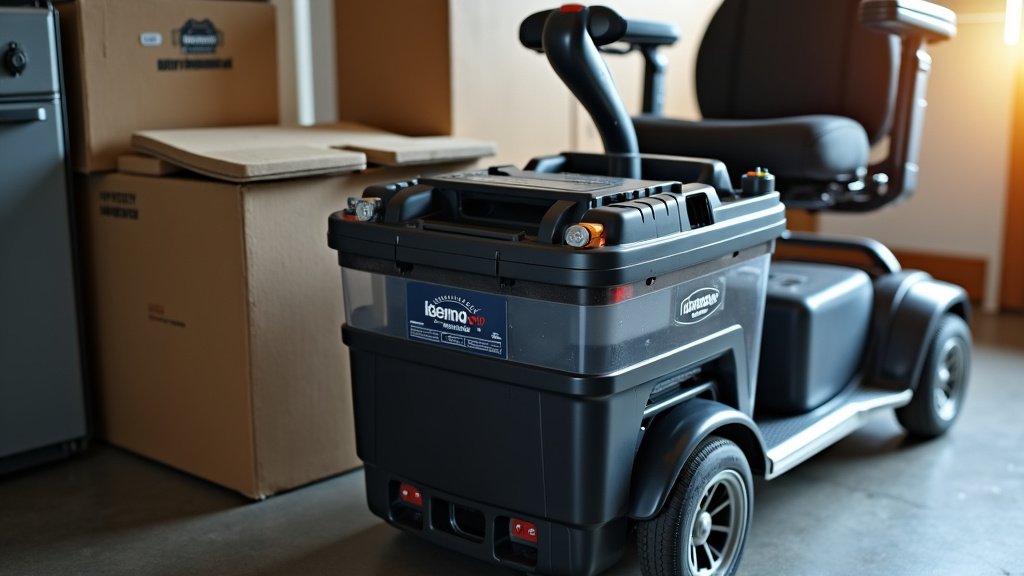
Safety Precautions During Storage
Safety should always be your top priority, even when dealing with stored batteries.
Ventilation and Environment
If you’re storing lead-acid batteries, ensure the area has adequate ventilation. Lead-acid batteries can release explosive hydrogen gas during charging. While this is less of a concern when fully charged and stored, it’s good practice to be mindful. Avoid storing batteries in sealed containers unless specifically designed for battery storage. Keep them away from open flames or sparks.
Handling and Physical Damage
Handle the battery with care. Avoid dropping it or exposing it to physical shocks. Batteries contain heavy chemicals and can be damaged internally, leading to leaks or reduced performance. Always wear gloves and eye protection when handling batteries, especially if they appear damaged.
A good practice is to place the battery in a sturdy plastic container or on a non-conductive shelf. This protects it from accidental spills and keeps it isolated.
A Quick Storage Checklist
Here’s a handy checklist to ensure you’ve covered all the bases:
- Charge it up: Fully charge the battery before placing it into storage.
- Find the spot: Store in a cool, dry location away from extreme temperatures and direct sunlight.
- Secure it: Place the battery in a stable, protected spot, ideally in a plastic container.
- Schedule checks: Set reminders to check the charge every 30-60 days.
- Top it off: Recharge the battery when the charge level drops too low.
- Inspect visually: Give the battery a quick look for any signs of damage or corrosion during checks.
Conclusion
Taking care of your mobility scooter battery during long-term storage is straightforward when you follow a few key principles. Remember to always start with a fully charged battery, find a cool, dry spot away from temperature extremes, and perform regular charge checks every month or two. If your charger has a maintenance mode, use it; otherwise, be ready to recharge periodically to prevent self-discharge. By implementing these simple steps, you’ll ensure your battery remains healthy and ready for your next adventure.
Frequently Asked Questions
How often should I recharge a mobility scooter battery in storage?
You should check your mobility scooter battery’s charge level about every 30 to 60 days. If the charge has dropped too low during this check, it’s time to connect it to the charger and bring it back to a full charge. This regular top-up prevents deep discharge and maintains battery health.
Can I leave my mobility scooter plugged into the charger all the time when storing it?
It depends on your charger. If it has an automatic maintenance or trickle charge mode, leaving it plugged in is usually fine. However, for basic chargers, it’s often best to disconnect after a full charge and recharge periodically to avoid overcharging the battery.
What’s the biggest mistake people make when storing mobility scooter batteries?
The most common mistake is storing a mobility scooter battery when it’s already partially discharged. Batteries naturally self-discharge over time, and if they start low, they can reach a critically discharged state, causing permanent damage and significantly reducing their lifespan.
Is it okay to store the battery in my garage if it gets cold in winter?
No, storing your battery in an uninsulated garage is not ideal if temperatures drop significantly. Extreme cold can damage lead-acid batteries and slow down the chemical reactions in lithium-ion batteries. A stable room temperature, ideally between 50°F and 70°F, is best.
What happens if my mobility scooter battery freezes while in storage?
If a mobility scooter battery, especially a lead-acid type, freezes, it can suffer permanent damage. The water in the electrolyte can expand, potentially cracking the battery casing or damaging the internal plates. This can lead to leaks and render the battery unusable.
