
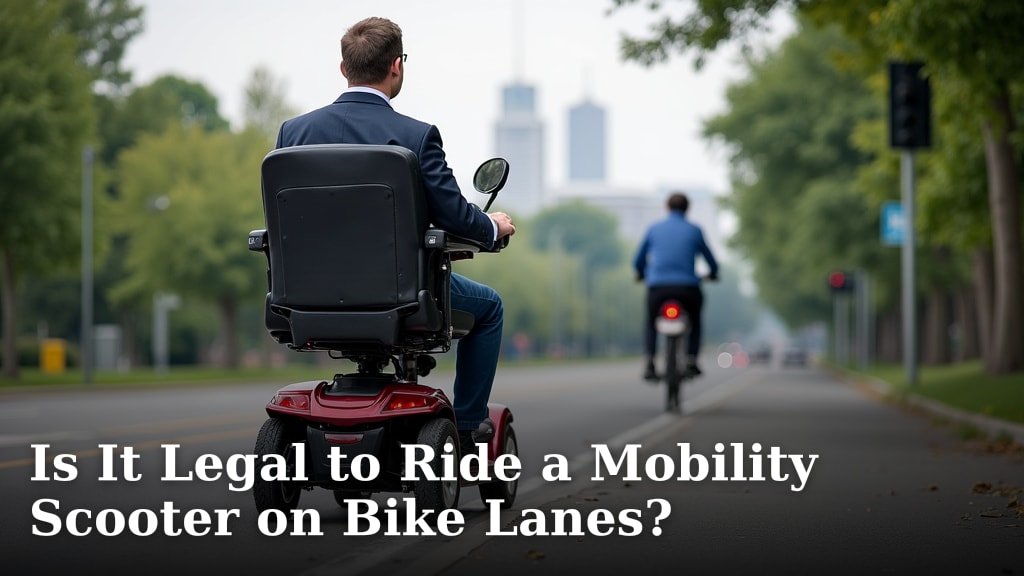
Generally, yes, you can ride a mobility scooter on bike lanes in many places. Mobility scooters are often treated like pedestrians or bicycles. Always check your local laws and regulations first, though.
Many states and cities have specific rules for mobility devices. These rules help keep everyone safe, including you. You’ll want to know if your scooter meets any power or speed limits for bike lane use. Safety is key when sharing paths with cyclists and pedestrians.
- Mobility scooters are usually allowed in bike lanes.
- Local laws and city ordinances are important to check.
- Scooter speed and power limits might apply.
- Safety for all users is a top priority.
Let’s dive into the details of what you need to know about riding your mobility scooter in bike lanes, ensuring you stay safe and within the law.
Navigating Bike Lanes: Rules for Mobility Scooters
You might be wondering if your mobility scooter truly belongs in a bike lane. The short answer is often yes, but there’s more to it than a simple green light. It’s all about understanding where your scooter fits into the transportation puzzle.
Many places classify mobility scooters as either pedestrian aids or electric personal assistive mobility devices. This classification changes the rules you need to follow. Think of it like knowing whether you’re driving a car or riding a bicycle; different rules apply to each.
Understanding Mobility Device Classifications
When you’re trying to figure out where you can ride, the first step is knowing how your scooter is defined by law. These definitions aren’t always the same from one city to another, or even one state to another.
Some states consider mobility scooters to be similar to pedestrians. This means you might be allowed on sidewalks and pedestrian paths. Other states see them more like bicycles, especially if they can go a bit faster. We found that the speed and power of your scooter are often key factors in these classifications.
State-by-State Variations
It’s like a patchwork quilt across the US when it comes to mobility scooter laws. What’s perfectly fine in California might be a no-go in New York. You really can’t assume the rules are the same everywhere you go.
For example, some states have specific laws allowing mobility devices on roads or bike lanes if sidewalks are unavailable (National Highway Traffic Safety Administration). Other states have stricter limits on speed for bike lane use. It’s a good idea to search for your state’s Department of Motor Vehicles (DMV) website or transportation department for details.
Local City Ordinances
Beyond state laws, cities often have their own rules. These are called ordinances, and they can add another layer of complexity. A city might have rules about how fast you can go in a bike lane, or if you can use a bike lane at all.
We’ve seen cities that specifically allow mobility scooters in bike lanes only if they stay below a certain speed, like 15 miles per hour. Other cities might have designated shared paths where both bikes and scooters are welcome. It’s worth checking your local city or county government website to find these specifics.
Safety Considerations for Bike Lane Use
Even if it’s legal, safety should always be your top priority. Bike lanes are designed for bicycles, which often move at different speeds than mobility scooters. Sharing the road, or in this case, the lane, means being aware of everyone around you.
Think about cyclists: they can be fast and quiet. You need to be prepared for that. And they need to be prepared for you. It’s a two-way street of awareness.
Visibility and Awareness
Making sure you are seen is incredibly important. You want to be as visible as possible to cyclists, pedestrians, and even drivers if the bike lane is next to a road. Don’t assume others see you just because you see them.
- Wear bright clothing: Especially during the day, bright colors make you stand out.
- Use reflective gear: At dawn, dusk, or night, reflectors are a must.
- Lights, lights, lights: Front and rear lights are crucial. Many experts say a bright white headlight and a red taillight are essential (Bicycle Alliance of Washington).
- Flags: A brightly colored flag on a pole can increase your visibility, especially to drivers.
Speed and Maneuverability
Bike lanes are for moving traffic, not typically for leisurely strolls. While your scooter might have a good top speed, consider the speed of cyclists around you. Too slow, and you could be a hazard; too fast, and you might lose control.
Your scooter’s maneuverability also plays a role. Can you quickly steer to avoid an obstacle? Are you comfortable with sudden stops if needed? These are important questions to ask yourself before entering a busy bike lane.
Sharing the Space with Cyclists
Cyclists have certain expectations when they enter a bike lane. They expect to move at a certain pace and often assume others will keep right, pass on the left. Knowing these unwritten rules can make your experience much smoother.
Always try to ride consistently and predictably. Avoid sudden swerving. If you need to stop, try to move to the side of the lane if possible. Hand signals, just like cyclists use, can also be very helpful in communicating your intentions to others.
Key Factors Influencing Legality
When diving into the legality of riding your mobility scooter on bike lanes, several factors come into play. These aren’t always about whether you *can* physically do it, but whether you *should* and *are allowed to*.
Scooter Specifications
Your scooter itself might have a say in where it can go. Not all mobility scooters are created equal. Some are designed for indoor use, while others are robust outdoor vehicles. Our guide on how to choose the right mobility scooter can help you understand the different types available.
Speed Limits and Motor Power
This is probably the biggest factor. Many regulations for electric bikes and mobility devices center around their maximum speed and motor wattage. If your scooter can go faster than a certain speed (e.g., 20 mph), it might be classified differently than a slower model.
We’ve seen that some jurisdictions consider anything over 20 mph to be a motor vehicle, which would generally exclude it from bike lanes. Always check the specifications of your mobility scooter against local regulations. The motor’s power, usually measured in watts, can also be a deciding factor.
Weight and Size Limitations
While less common, some bike lanes or shared paths might have restrictions based on the weight or width of a device. A very wide or heavy scooter could pose a problem, especially in narrow bike lanes or on bridges.
Think about the physical space you take up. If your scooter is significantly wider than a standard bicycle, it might make it difficult for cyclists to pass you safely, or for you to navigate tight turns. This is more of a practical consideration, but sometimes it’s written into law.
Infrastructure and Signage
The bike lane itself can tell you a lot about whether your scooter is welcome. What does the signage say? Is it a dedicated bike lane, a shared use path, or something else?
Types of Bike Lanes
Not all bike lanes are the same. You have your painted bike lanes on the road, separated bike lanes with physical barriers, and then multi-use paths. Each might have different rules.
| Lane Type | Common Use | Scooter Legality (General) |
|---|---|---|
| Painted Bike Lane | Bicycles, sometimes e-bikes | Often allowed, check speed limits |
| Protected Bike Lane | Bicycles, e-bikes | Generally allowed, good for safety |
| Multi-Use Path | Bicycles, pedestrians, skateboards | Most likely allowed, shared space |
| Sidewalk | Pedestrians | Often allowed, check for prohibitions |
We found that multi-use paths are generally the most accommodating for mobility scooters. They are designed for a variety of non-motorized and slow-moving traffic. Dedicated bike lanes might be more restrictive, especially if they are designed for faster cycling.
Posted Regulations and Signage
Look for signs! This is perhaps the easiest way to know. Many bike lanes or shared paths will have signs indicating what devices are permitted or prohibited. Some signs might show pictures of bicycles and pedestrians, implying shared use.
If you see a sign explicitly prohibiting “motorized vehicles,” that might include your scooter, depending on how it’s classified locally. Always pay attention to posted signs; they are there for a reason and can save you from potential fines or accidents.
Your Personal Responsibility Checklist
To make sure you’re riding legally and safely, here’s a quick checklist to keep in mind:
- Research your state and local laws for mobility scooters.
- Understand how your scooter is classified (e.g., pedestrian aid, electric device).
- Know your scooter’s maximum speed and motor power.
- Ensure you have proper lights and reflectors for visibility.
- Always observe and follow posted signs on paths and lanes.
- Practice good “road etiquette” by being aware and predictable.
Taking these steps ensures you’re not only within your legal rights but also prioritizing safety for yourself and others. Happy riding!
Conclusion
Navigating bike lanes on your mobility scooter comes down to a few key principles: knowing the law, prioritizing safety, and understanding your equipment. We’ve shown that while it’s often permissible, the details vary greatly by location. Your awareness and adherence to local rules ensure a safe experience for everyone.
Always remember that your personal responsibility is paramount. Before heading out, take the time to verify the specific regulations in your area. This simple step can prevent issues and help you ride with confidence.
Frequently Asked Questions
What if there are no sidewalks available?
If sidewalks are unavailable or impassable, many jurisdictions allow mobility scooters to use the roadway or bike lanes. This is often an exception made for safety. Always proceed with extreme caution and high visibility if you must use the road.
Can a mobility scooter be too fast for a bike lane?
Yes, your scooter can be too fast. Many areas have speed limits for devices in bike lanes, often around 15-20 mph. If your scooter exceeds these limits, it might be classified differently and not permitted.
Do I need a license or registration for my mobility scooter to use a bike lane?
Generally, mobility scooters do not require a driver’s license or vehicle registration for use in bike lanes or on public paths. However, this can vary by state and specific local ordinances. It’s always best to confirm with your local DMV.
How can I make my mobility scooter more visible in a bike lane?
To enhance visibility, use bright clothing, reflective tape on your scooter, and always have working front and rear lights. A safety flag attached to your scooter can also significantly increase your visibility to others.
Are electric wheelchairs allowed in bike lanes under the same rules as mobility scooters?
Yes, electric wheelchairs are typically treated similarly to mobility scooters under most laws regarding bike lane use. They are classified as mobility aids. However, like scooters, local regulations and speed considerations still apply.
