
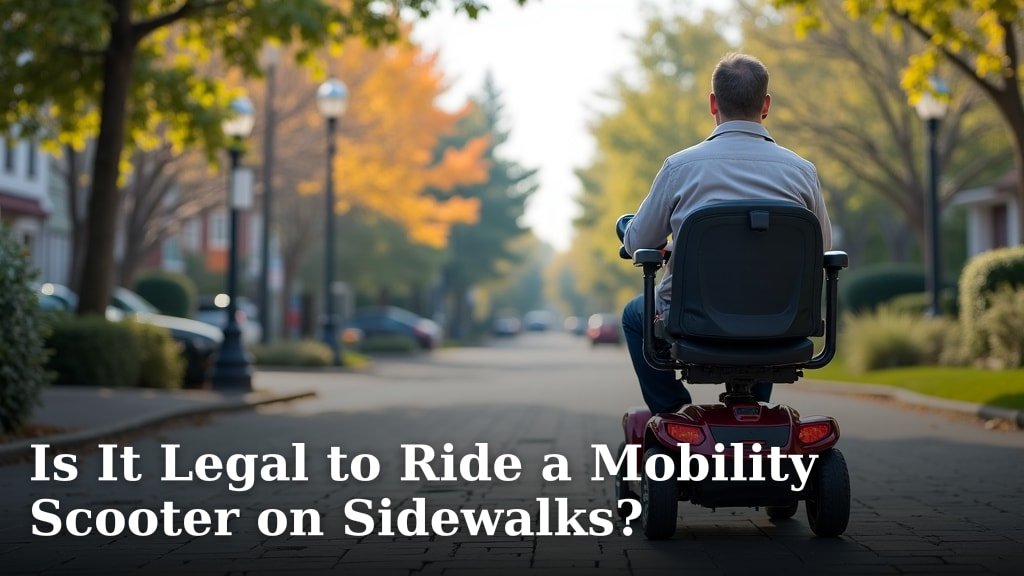
Yes, in many places you can ride a mobility scooter on sidewalks, but this isn’t always the case. Laws about mobility scooter use can vary Understanding what makes a mobility scooter a road legal mobility scooter can help you determine where it’s safe and permissible to ride.quite a bit by location, so it’s smart to check your local rules.
You might think all sidewalks are fair game, but specific regulations often depend on your state or city. Some areas consider mobility scooters to be pedestrian aids, while others classify them more like vehicles. Understanding these local distinctions helps ensure you stay safe and legal.
- Mobility scooter use on sidewalks varies by state and city.
- Always check local laws before riding.
- Some places treat scooters as pedestrian aids.
- Other areas have stricter rules for their use.
- Safety and legality depend on understanding these local details.
Let’s walk through exactly what you need to know about riding your mobility scooter on sidewalks, including common rules and important safety tips.
Riding Your Mobility Scooter on Public Paths: What’s Allowed?
Generally, you can ride your mobility scooter on sidewalks across the U.S. Think of it like walking, but with assistance. However, there are important rules and exceptions you need to know.
Your mobility scooter is often seen as a pedestrian device, not a vehicle. This means you usually follow the same rules as someone walking. But this isn’t always a simple answer, as laws can change from one place to another.
We’ve found that understanding these local differences is key. It helps you stay safe and avoid fines. Let’s break down the common rules and where you might find variations.
Federal vs. State vs. Local Laws: A Confusing Mix
When it comes to mobility scooters, you’re dealing with layers of laws. It’s like a Russian doll of regulations. There’s what the federal government says, then your state, and finally, your city or town.
The Americans with Disabilities Act (ADA) provides a broad framework. It ensures people with disabilities have access to public places. Under the ADA, mobility devices, including scooters, are generally allowed where pedestrians can go.
However, the ADA doesn’t micromanage every detail. It leaves room for states and local governments to add their own rules. This is where the “it depends” factor comes in.
The ADA’s Role in Mobility Scooter Use
The ADA is a big deal for ensuring accessibility. It views mobility scooters as necessary aids for people with disabilities. This means places that serve the public usually can’t ban you from using your scooter.
Think of it this way: if a building allows wheelchairs, it generally must allow mobility scooters too. This principle extends to sidewalks. The ADA helps protect your right to use your scooter for independent travel.
However, the ADA isn’t a free pass for reckless riding. It supports reasonable accommodations, but it also expects you to operate your scooter safely and considerately. Your responsibility plays a big part here.
Common State and Local Regulations You Might Encounter
Even with ADA protections, states and cities can set their own rules. These often cover things like speed limits, where you can ride, and sometimes even lighting requirements.
For example, some cities might have a maximum speed limit for scooters on sidewalks. Others might require certain lights or reflectors, especially if you’re riding at dusk or night. These are put in place for everyone’s safety.
It’s important to remember that these aren’t meant to restrict you unfairly. They are usually designed to keep both scooter users and pedestrians safe. Always try to be a courteous rider.
Speed Limits on Sidewalks
This is a common regulation. Most areas want you to travel at a “pedestrian speed” when on the sidewalk. What does that mean? It means matching the pace of people walking around you.
A typical walking speed is around 3-4 miles per hour. While many scooters can go faster, it’s wise to keep your speed low on crowded sidewalks. You don’t want to surprise or endanger anyone.
Some cities might have an exact speed limit posted, say 5 mph. If you don’t see a sign, defaulting to a brisk walking pace is usually a safe bet. Err on the side of caution.
When Sidewalks are Prohibited: Understanding Exceptions
Believe it or not, there are times when even a sidewalk might be off-limits. This is rare but can happen. For instance, some very narrow sidewalks, especially those directly next to busy roads, might not be suitable.
You might also find sidewalks that are part of private property, like a shopping mall’s entranceway, which could have specific rules. Always look for signage. If a sign says “No motorized vehicles,” it typically applies to scooters unless otherwise specified.
Another exception might be during special events or construction zones. If pedestrians are rerouted, you’ll likely need to follow the same alternative path. Always prioritize your safety and follow any official directions.
Riding Safely: Your Responsibility as a Scooter User
Legality isn’t the only concern; safety is paramount. Even where it’s legal, riding a mobility scooter on sidewalks requires awareness and good judgment. You’re sharing that space with others.
Think of yourself as a careful driver, but on a smaller scale. You want to avoid collisions and make sure everyone feels comfortable. Your actions reflect on all scooter users.
Here’s a quick checklist for safe and considerate riding:
- Be predictable: Don’t make sudden turns or stops.
- Use hand signals if your scooter doesn’t have turn signals.
- Maintain a safe distance from pedestrians.
- Yield to pedestrians, especially children and the elderly.
- Be visible: Wear bright clothing, especially at dawn/dusk.
- Use your horn or bell gently to alert others, not to scare them.
Roads vs. Sidewalks: Where Should You Ride?
This is a common dilemma. When is it better to ride on the road, and when is the sidewalk the safer option? The general rule for mobility scooters is to use the sidewalk whenever possible and safe.
Sidewalks are usually designed for foot traffic, offering separation from fast-moving vehicles. This makes them inherently safer for slower-moving devices like scooters. However, there are times when the road might be your only or best option. For situations where you might need to navigate varied terrains, consider exploring what is the best mobility scooter for outdoor use.
If a sidewalk is broken, extremely narrow, or nonexistent, you might need to use the road. In such cases, act like a pedestrian walking on the road: face oncoming traffic, stay as far to the edge as possible, and be extra visible.
| Situation | Best Riding Location | Safety Considerations |
|---|---|---|
| Wide, clear sidewalk | Sidewalk | Maintain pedestrian speed, yield to walkers. |
| Narrow, crowded sidewalk | Sidewalk (with caution) or consider alternative if available | Go very slowly, be highly aware of surroundings. |
| Broken or impassable sidewalk | Roadway shoulder or bike lane (if legal) | Face traffic, wear bright colors, use lights. |
| No sidewalk available | Roadway shoulder (if safe and legal) | Act like a pedestrian, stay visible, be alert. |
The Importance of Checking Local Ordinances
We can’t stress this enough: always check your local rules. Laws can change, and what’s true in one county might not be true in the next. How do you find this information?
A good starting point is your city or county government website. Look for sections on transportation, public works, or ordinances. You can also call your local non-emergency police line or town hall and ask directly.
Many government websites have a search function that can help you find regulations related to “mobility devices” or “motorized wheelchairs.” Taking a few minutes to research can save you a lot of hassle and potential fines.
Where to Find Local Mobility Scooter Laws
Here’s a quick guide to tracking down those local rules:
- City/County Website: Search for “ordinances,” “traffic laws,” or “mobility devices.”
- Department of Public Works: Often responsible for sidewalk maintenance and regulations.
- Local Police Department (non-emergency line): They can usually tell you if there are specific local rules.
- Disability Advocacy Groups: Local chapters might have resources or know the specifics for your area.
- Senior Centers: Sometimes they offer information or workshops on mobility device safety.
Remember, a quick phone call or search online can provide peace of mind. Knowing the rules empowers you to ride confidently and safely.
Conclusion
Navigating the rules for riding your mobility scooter on sidewalks can seem tricky, but it’s entirely manageable. While the ADA generally supports your right to use these essential devices, local laws often add specific details. We’ve seen that understanding these variations and prioritizing safety are key to confident, legal riding. Your responsibility as a scooter user helps ensure everyone can share public spaces peacefully. Always check those local ordinances for the most up-to-date information.
Before your next outing, take a moment to confirm the regulations in your specific city or town. A quick online search or call can provide clarity and peace of mind.
Frequently Asked Questions
Can I ride my mobility scooter on the road if there’s no sidewalk?
Yes, if there’s no safe or accessible sidewalk, you might need to use the road. When doing so, act like a pedestrian: face oncoming traffic, stay as far to the edge as possible, and be highly visible to drivers.
Are there different rules for electric wheelchairs versus mobility scooters on sidewalks?
Generally, both electric wheelchairs and mobility scooters are treated similarly under the ADA and most local laws as “other power-driven mobility devices.” However, always verify with your local municipality for any specific distinctions they might make.
What’s the typical speed limit for mobility scooters on sidewalks?
Many areas expect you to travel at “pedestrian speed,” which is usually around 3-4 miles per hour. Some cities might post a specific limit, often 5 mph. It’s best to err on the side of caution and match the pace of walkers around you.
Do I need special insurance to ride a mobility scooter on sidewalks?
While not legally required in most places, personal liability insurance can be a good idea. This helps protect you in case of an accident. Check with your home insurance provider to see if your policy offers any coverage for personal mobility devices.
How can I be sure I’m following all the local rules for my area?
The most reliable way is to visit your city or county government’s official website. Look for sections on transportation, public works, or local ordinances. You can also contact your local police department’s non-emergency line for guidance.
