
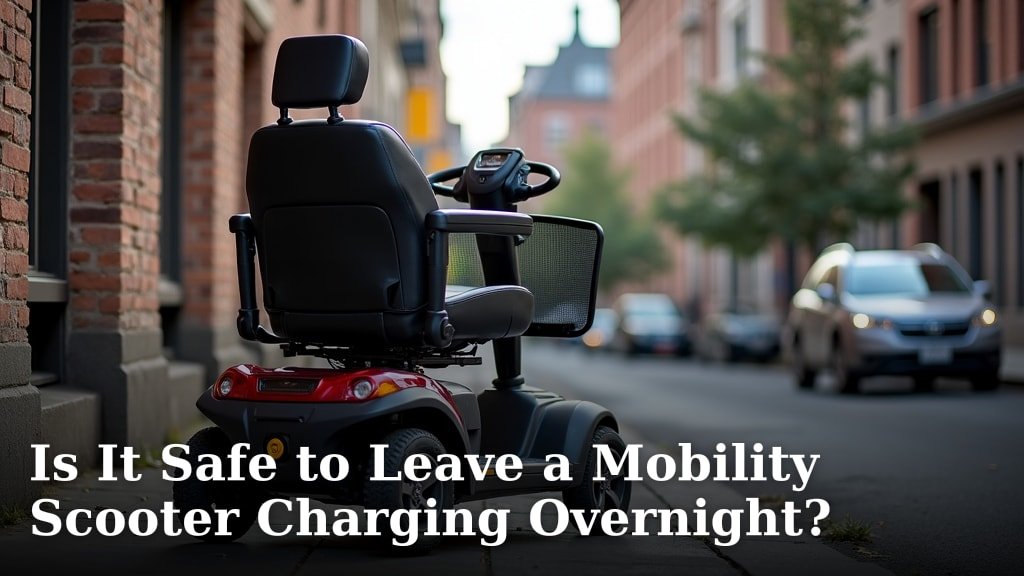
Yes, it is generally safe to leave a mobility scooter charging overnight, thanks to modern battery technology and built-in safety features. Most chargers include mechanisms to prevent overcharging, which protects your battery.
You want your scooter ready when you are, right? We found that today’s smart chargers greatly reduce the risk of battery damage. This means waking up to a fully charged scooter without worry.
TL;DR:
- Modern chargers prevent overcharging.
- Leaving it plugged in overnight is usually safe.
- Check your scooter’s manual for specific advice.
- Using the right charger is very important.
- Avoid extreme temperatures during charging.
Let’s dive into the details so you can keep your mobility scooter’s battery in top shape for years to come.
Overnight Charging of Your Mobility Scooter: The Lowdown
Yes, it’s generally fine to leave your mobility scooter charging overnight. Modern chargers are smart and protect your battery.
You probably want to wake up to a fully charged scooter. Good news! Today’s charging systems are designed with your convenience and safety in mind. They handle the “thinking” so you don’t have to.
How Smart Chargers Protect Your Battery
Think of your scooter charger like a smart assistant. It doesn’t just push electricity into the battery. Instead, it monitors the battery’s state. When the battery reaches full capacity, the charger switches to a “float” mode. This means it only provides a tiny trickle of power, just enough to maintain the charge without overfilling it. It’s like keeping a water glass full without letting it overflow.
We found that this float charge is key. It prevents the battery from being damaged by too much current. This technology significantly extends the life of your battery, saving you money and hassle in the long run.
Types of Batteries and Their Charging Needs
Mobility scooters typically use one of two main types of batteries: sealed lead-acid (SLA), which includes AGM and Gel batteries, or lithium-ion batteries. Each has slightly different charging characteristics, but modern chargers adapt to both.
Sealed Lead-Acid (SLA) Batteries
SLA batteries, like AGM (Absorbent Glass Mat) and Gel, are common. They are robust and reliable. These batteries prefer a slow, steady charge. Overcharging can lead to gassing and electrolyte loss, but as we mentioned, modern chargers prevent this.
Lithium-Ion Batteries
Lithium-ion batteries are lighter and offer a longer range. They also charge faster. These batteries have built-in battery management systems (BMS) that work with the charger. The BMS monitors voltage and temperature, adding another layer of safety against overcharging and overheating.
No matter the battery type, using the charger designed for your scooter is always the best practice. Mixing and matching can lead to problems.
Understanding Overcharging Risks (and Why They’re Less Common Now)
Years ago, overcharging was a real concern. Older chargers didn’t have the smart cutoff features we see today. This could lead to battery damage, reduced lifespan, and in rare cases, safety hazards.
But technology moves fast, right? The risks associated with overcharging are much lower now. Here’s why.
The Science Behind Overcharging
When a battery is overcharged, it can cause internal stress. For lead-acid batteries, this can mean overheating and evaporation of the electrolyte. For lithium-ion batteries, it can lead to plating of lithium metal, which can reduce capacity and potentially cause internal shorts.
Sounds scary, but don’t fret! Modern chargers have multiple safeguards. They constantly communicate with the battery to deliver just the right amount of power.
Built-in Safety Features of Modern Chargers
Today’s chargers come packed with safety features. We found these are standard in almost all new mobility scooter chargers:
- Automatic Shut-off: The charger stops supplying power once the battery is full.
- Float Mode: It maintains the charge with a small, safe current.
- Temperature Monitoring: Some advanced chargers monitor battery temperature to prevent overheating.
- Short-Circuit Protection: Guards against electrical faults.
- Reverse Polarity Protection: Prevents damage if you accidentally connect the charger incorrectly.
These features work together to make overnight charging a worry-free experience. It’s like having a little guardian for your battery!
Best Practices for Charging Your Mobility Scooter
Even with advanced chargers, a few simple habits can keep your battery healthy and extend its life. Think of it as giving your scooter a little extra TLC.
Always Use the Correct Charger
This is probably the most important tip. Your scooter came with a specific charger for a reason. It’s designed to match your battery’s voltage and chemistry perfectly. Using a different charger, even one that looks similar, can cause problems. It might not provide the right voltage, or it might lack the crucial safety features your scooter needs.
If you lose your charger, always buy a replacement directly from the scooter manufacturer or a trusted dealer. Don’t try to substitute with a generic charger.
Where to Charge Your Scooter
Location matters! Charge your scooter in a cool, dry, and well-ventilated area. Extreme temperatures, both hot and cold, can affect charging efficiency and battery life. Avoid charging in direct sunlight or in a very cold garage.
For example, we found that batteries perform best when charged at room temperature, around 68-77°F (20-25°C). Charging in very hot conditions can lead to overheating, while very cold conditions can reduce charging efficiency and capacity (Battery University).
When to Charge Your Scooter
Many experts say it’s best to charge your scooter after each significant use. Don’t wait for the battery to be completely drained. Partial discharges followed by a recharge are generally better for battery health, especially for lithium-ion batteries. It’s like topping off your gas tank instead of running it completely empty each time.
Here’s a quick checklist for optimal charging:
- Always use the original or approved replacement charger.
- Charge in a cool, dry, well-ventilated space.
- Avoid extreme temperatures during charging.
- Charge after significant use, don’t wait for full discharge.
- Check the charger and cables for damage regularly.
- Read your scooter’s user manual for specific charging instructions.

Understanding Battery Lifespan and Charging Habits
How you charge your scooter directly impacts how long its battery will last. Batteries don’t last forever, but good habits can certainly prolong their usefulness. For those looking to upgrade, our guide to the best battery powered mobility scooters can help you find a model with optimal battery performance.
Factors Affecting Battery Life
Several things influence how long your scooter battery lasts:
- Number of Charge Cycles: Every battery has a limited number of times it can be fully charged and discharged.
- Depth of Discharge: Consistently draining the battery completely before recharging can reduce its lifespan.
- Temperature: Extreme heat or cold can degrade battery performance over time.
- Maintenance: Proper charging and storage habits.
- Battery Type: Lithium-ion batteries generally have more charge cycles than SLA batteries.
Comparing Charging Habits
Let’s look at how different charging approaches can affect your battery over time. You might be surprised at the difference!
| Charging Habit | Impact on Battery | Recommendation |
|---|---|---|
| Charging Overnight (Modern Charger) | Little to no negative impact, often beneficial for readiness. | Generally safe and convenient. |
| Frequent Partial Charges | Can extend lifespan for lithium-ion; good for SLA. | Recommended after each significant use. |
| Draining to Zero Regularly | Shortens overall battery lifespan significantly. | Avoid if possible; only occasional deep discharge. |
| Using Wrong Charger | Can cause damage, overheating, or inefficient charging. | Never do this; use only manufacturer-approved. |
As you can see, leaving your scooter charging overnight with its proper charger fits right into the “good habits” category. It’s about consistency and using the tools as they were designed.
Conclusion
You can confidently leave your mobility scooter charging overnight. Modern chargers are designed with smart technology to protect your battery from overcharging, whether you have SLA or lithium-ion types. We found that these built-in safeguards ensure convenience and safety. By always using the correct charger, charging in suitable conditions, and following your scooter’s manual, you’ll significantly prolong its battery life. So, plug it in, rest easy, and wake up to a fully powered scooter, ready for your day.
Frequently Asked Questions
Is it okay to charge my scooter every night, even if the battery isn’t low?
Yes, it’s generally good practice to charge your scooter after each day’s use, especially if you have a modern charger. This helps maintain the battery’s health and ensures it’s always ready when you need it. Partial charges are often better than waiting for a full drain.
How long does it typically take to fully charge a mobility scooter battery?
Charging time varies based on battery size, its current charge level, and the charger’s output. Most scooters take anywhere from 8 to 12 hours for a full charge from a deeply discharged state. Refer to your scooter’s manual for precise charging times.
Can I use a car battery charger for my mobility scooter?
No, you should never use a car battery charger for your mobility scooter. Car chargers have different voltage and amperage outputs that can damage your scooter’s battery and potentially pose a safety risk. Always use the charger specifically designed for your scooter.
What if my charger feels warm during the charging process?
It’s normal for a charger to feel slightly warm during operation, as this indicates it’s working to convert electricity. However, if the charger becomes excessively hot or smells burnt, unplug it immediately. This could indicate a fault and should be checked by a professional.
How often should I replace my mobility scooter battery?
The lifespan of a mobility scooter battery depends on its type, usage, and maintenance. On average, SLA batteries last 1-2 years, while lithium-ion batteries can last 3-5 years or more. Look for signs like reduced range or longer charging times as indicators for replacement.
