What Is a Walker With Wheels Called?
A walker with wheels is commonly called a rolling walker or wheeled walker. One with wheels on all legs and hand brakes is usually called a rollator.
On this page (8 sections)
- What is a walker with wheels called?
- How do wheeled walkers and rollators move differently?
- What is a walker with a seat called?
- Which rollator features matter when choosing?
- Can you add storage to a walker with wheels?
- How should you set up and care for a wheeled walker?
- What mistakes should you avoid when choosing a rollator?
- Which name should you use when shopping?
A walker with wheels is commonly called a rolling walker or wheeled walker.
If it has wheels on all legs and hand brakes, it is usually called a rollator.
The names overlap in everyday speech, so shop by the frame and features rather than the label alone.
The main choice is whether you want a walker that rolls only at the front or a rollator that moves on wheels all around and uses hand brakes.
That difference shapes how the frame moves and how you stop it.
A front wheeled walker rolls forward while the back legs stay in contact with the floor.
This can suit someone who wants less lifting at each step but still wants some drag and contact at the rear.
A rollator rolls on all wheels and needs hand brakes for slowing, stopping, and locking in place.
This can suit someone who can operate those brakes with control and wants easier movement over longer distances.
Names also vary between shops and brands, so one seller may use rolling walker for a frame another seller calls a rollator.
Check the wheel layout, brake type, and seat instructions before you decide what a model is designed to do.
A seat, pouch, or basket adds convenience, but none of those extras changes the basic name of the frame.
The right term matters less than a fit that lets you stand upright, steer safely, and manage the brakes every time.
What is a walker with wheels called?
A walker with wheels is generally called a wheeled walker or rolling walker. That can mean a frame with 2 front wheels, or a rollator with wheels on all legs.
A standard walker has four legs and no wheels, so you lift and place it as you step. A front-wheeled walker rolls forward on its front wheels while the rear legs stay in contact with the floor.
A rollator usually has 3 or 4 wheels and hand brakes. Many also have a seat and storage, but those extras are not part of the definition.
For an overview of walker styles, see our guide to types of walkers for seniors.
Is a walker with wheels always called a rollator?
No. Rollator usually means a wheeled walker with hand brakes, often with wheels on all legs.
A frame with only 2 front wheels is more often called a two-wheeled or front-wheeled walker.
Names are not used consistently across brands. Count the wheels, find the brakes, and check whether the instructions allow sitting on the frame before deciding what a particular model is designed to do.
How do wheeled walkers and rollators move differently?
A front-wheeled walker rolls at the front and keeps its rear legs against the floor, while a rollator moves on its wheels and uses hand brakes to slow or stop. This difference affects how you control the frame as you walk.
A front-wheeled design may suit someone who wants the frame to move forward without lifting it at every step, while retaining rear contact with the floor. It is a poor fit if you need the frame to roll freely on all legs or want a built-in seat.
A rollator suits someone who can manage its hand brakes and wants a frame that rolls on all wheels. It may not suit someone who needs a walker that stays in contact with the floor at the back or cannot reliably operate the brakes.
If you’re weighing the support styles, our walkers and rollators buying guide covers the wider choice.
What is a walker with a seat called?
A walker with a seat is often called a rollator walker or rollator with seat. Many include hand brakes and a pouch, but features and safe-use instructions vary by model.
A seat is useful when you need a place to rest during an outing. It does not make every wheeled walker safe to sit on, and the frame should be stationary with its brakes locked before you use a seat.
The Drive Medical Rollator Walker with Seat has a padded seat, fold-down backrest, hand brakes, and an under-seat pouch. Its 7.5 in wheels are intended for indoor and outdoor navigation.
Choose this style if you can control the brakes and want a seat and storage close at hand. Skip it if you cannot lock and release the brakes consistently, or if the seat height and frame fit do not work for you.
For more options, see Medline rollator walkers.
Which rollator features matter when choosing?
Start with fit, brake control, wheel setup, and where you plan to walk. A seat and storage matter when you will use them, but should not outweigh safe control and a suitable frame.
Set the handle height so you can stand upright with a relaxed grip and a slight bend in your elbows. If the handles are too low, you may lean forward; if they are too high, your shoulders may rise.
Check the maker’s adjustment range and confirm the frame suits your height.
Think about the surfaces and turns along your regular routes. Larger wheels can help a rollator pass over small obstacles, while a lighter or more compact folding frame may be easier to store or transport.
Those features do not replace a stable walking surface or careful control.
The VOCIC Z21 offers adjustable handles for users from 4 ft 11 in to 6 ft 3 in, a seat with three height settings, 8 in puncture-proof tires, and a folding frame. Its brakes have free, deceleration, and stop modes.
This style fits someone who needs a wider height range, a seat, and wheels suited to varied surfaces. Its listed weight is about 22 lb, so choose another frame if lifting that weight into a car is difficult.
Before each use, make sure the frame is unfolded and locked, fasteners are secure, and the brakes work.
Can you add storage to a walker with wheels?
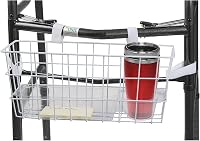
Yes, a basket or organizer can add space for small essentials if it attaches securely and stays clear of the wheels and brakes.
Check the walker frame shape and front bar before picking an accessory.
The HealthSmart basket uses adjustable hook and loop straps and includes a removable plastic tray and a cup holder.
It fits most walkers and rollators, is made of plastic, measures 16 by 5.5 by 7 inches, and has a 10 pound capacity.
Use it for small items such as a phone, glasses, or medicine, and keep drinks in the cup holder rather than loose in the basket.
Wipe the tray clean as needed, check the straps stay snug, and keep the load balanced so it does not pull to one side.
It is a useful add-on if you want to carry a phone, glasses, or other small items within reach. Skip it if your frame cannot hold it securely or the basket blocks your path, makes steering awkward, or interferes with brake access.
Keep the load within its capacity and secure drinks before moving.
How should you set up and care for a wheeled walker?
Set up the frame on a clear, level surface and follow its instructions before the first walk. Check that the frame is fully open and locked, the handles are secure, and the wheels move freely.
Adjust both handles evenly to a height that lets you stand upright. Test the brakes while stationary, and learn how they engage and lock before using the walker outdoors or sitting on a rollator.
If anything feels loose or a brake does not hold, stop and resolve the issue before walking.
Wipe dirt and moisture from the frame and wheels, and check the wheels, fasteners, brake cables, seat, and storage attachments regularly. Avoid adding loads that pull the frame to one side or obstruct the wheels.
Replace worn parts only with parts that fit the model.
What mistakes should you avoid when choosing a rollator?
The most common mistake is buying by name alone. “Rolling walker” can describe different wheel layouts, so confirm where the wheels are, how the brakes work, and whether the frame is built to support sitting.
Do not assume a seat means you can sit at any time. Stop on a level surface, lock the brakes, and follow the specific instructions for the backrest and seat.
A rollator is also not a good match when the user cannot steer or operate its brakes with control.
Avoid choosing wheels based only on size or an “all-terrain” label. Consider the actual route, doorways, storage space, and whether you or a helper can lift and fold the frame.
A larger, heavier design can be harder to transport, while a compact frame may not suit every height or surface.
Which name should you use when shopping?
Search for “wheeled walker” or “rolling walker” when you want to compare any walker that rolls. Search for “rollator” when you want wheels on all legs and hand brakes, then add “with seat” or another feature if you need it.
Choose a front-wheeled walker if you want front wheels with the rear legs still contacting the floor. Choose a rollator if you can manage hand brakes and want a frame that rolls on all wheels, especially if a seat or storage would help during outings.
Before buying, verify the handle fit, wheel layout, brake operation, folding and lifting needs, and seat instructions. The name answers what the style is called; those details tell you whether it suits your day-to-day use.
If you’re comparing rollator options, our guide to rollator costs and what affects them is a useful next step.
Frequently asked questions
What is a walker with wheels called?
A walker with wheels is often called a rolling walker or wheeled walker. A model with wheels on all legs and hand brakes is commonly called a rollator.
Names vary, so check how many wheels it has and whether it has brakes before choosing.
What is a walker with a seat called?
A walker with a seat is usually called a rollator or rollator walker. Many rollators have wheels, hand brakes, and a seat for resting.
Check the model’s instructions for locking its brakes before sitting down.
Is a rollator the same as a walker?
A rollator is a type of walker, but the terms don't always mean the same thing. A standard walker may have no wheels or just 2 front wheels, while a rollator commonly has wheels on all legs and hand brakes.
Why are walkers called walkers?
Walkers are named for their role as walking aids: you hold the frame while moving. The name covers several designs, including standard walkers, wheeled walkers, and rollators, so the specific style matters when you shop.