Upright Walker vs Platform Walker: Which Is Better? (October 2026)
Choose an upright walker if you can grip its handles and want integrated armrests. Consider a platform attachment if you need forearm support because gripping a handgrip is difficult. Match the setup to your fit, control and daily routes.
On this page (9 sections)
- Upright walker vs platform walker: what is the main difference?
- Who should choose an upright walker?
- When is a platform attachment the better choice?
- What should you measure before buying?
- How do you set up and use the walker?
- What care and use habits help keep it ready?
- What mistakes should you avoid?
- Which option should you choose?
- Frequently asked questions
Choose an upright walker if you can grip its handles and want integrated armrests. Consider a platform attachment if you need forearm support because gripping a handgrip is difficult.
This upright walker vs platform walker comparison comes down to the kind of support you can use safely and comfortably.
An upright walker is a rolling walker with handles and armrests. A platform attachment adds a forearm cradle to a compatible walker, giving your arm a place to rest while the walker still needs to be controlled.
The names can be confusing because an upright walker may already have padded armrests. Focus on where your arm rests, what your hands must do, and whether you can steer and brake the assembled walker.


Upright walker vs platform walker: what is the main difference?
An upright walker combines armrests and handgrips in a rolling frame; a platform attachment adds a forearm cradle to a compatible walker. The choice depends on whether you can use the handles or need your arm supported on a cradle.
With an upright walker, your arms rest on padded supports while your hands reach the handles. Those handles remain important for steering and operating the brakes.
With a platform attachment, your forearm rests on a padded cradle and an adjustable strap can hold it in place.
A platform attachment is one part of a walker setup, not a complete mobility aid. The walker it attaches to supplies the frame, wheels and other features, so both pieces need to work together.
For a broader overview of walker styles, start with this complete walker and rollator buying guide. If you are weighing an upright walker against a wheeled seat model, see the upright walker vs rollator comparison.
Who should choose an upright walker?
Choose an upright walker if you can hold its handles and want armrests built into a wheeled frame. It can suit someone seeking upper-body support while walking, with brakes and other features available as part of the complete walker.
Consider your usual routes first. The frame needs enough room to pass through doorways and turn in the spaces where you walk.
A seat may be useful for resting, but it also adds bulk and affects how you store or transport the walker.
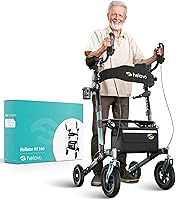
The Helavo Upright Walker with Seat has padded armrests, adjustable handles, a seat and an adjustable backrest. Its 10 in rubber front wheels are described as puncture-proof, and the frame weighs 22.7 lb, so check the size and lifting demands before deciding it fits your routine.
An upright walker is a poor fit if you cannot hold or use the handles to steer and brake, or if the frame is too wide for your home. A rollator or a clinician-recommended mobility aid may suit your needs better.
If integrated armrests are your priority, compare more options in this guide to upright walkers with armrests. The Helavo upright walker review offers a closer look at that model.
When is a platform attachment the better choice?
Consider a platform attachment if gripping a standard walker handle is difficult and a forearm cradle better suits your arm. The Drive Medical attachment is designed for people who have trouble reaching down to grasp a walker because of height, disability or injury.
Its vinyl-padded cradle supports the forearm, and an adjustable strap holds the arm in place. The attachment adjusts from 37–53 in and supports up to 300 lb.
It fits over a walker’s handgrip with a large top bracket, but you still need to confirm that it works with your specific walker.
A platform attachment may be unsuitable if you cannot control the walker once your arm is in the cradle, or if the attachment cannot be secured to your walker. Ask a physical or occupational therapist or mobility equipment supplier to check the arm position, attachment fit, brakes and steering.
What should you measure before buying?
Measure your routes, storage space and body fit before choosing either setup. A walker that provides the right arm support can still be a poor match if it cannot pass through a doorway or turn where you need it.
Measure the narrowest doorway and route in your home, plus the space where you plan to store the walker. Leave room for turns rather than measuring only the straight passage.
If you plan to transport the walker, check how much room it needs when folded or assembled.
The Agrish Narrow Walker Folding Upright Walker adjusts from 18–22 in wide and folds with a button. It has removable armrests and 10 height positions from 42–51 in.
Its frame supports users up to 450 lb, but you still need to check whether the chosen width and height work for your body and routes.
For any walker, check the maker’s height instructions and have a clinician help assess your standing position. Your arms should rest comfortably, and the chosen setup should let you reach the controls without leaning or twisting.
How do you set up and use the walker?
Set up the walker to the correct height, secure every attachment and practice with help before using it on your own. A clinician can check how you stand, reach the handles and control the brakes.
Assemble the walker according to its instructions and confirm that the frame is fully open and locked before putting weight on it. For a platform attachment, secure the bracket and strap as directed, then check that the attachment does not shift when your arm rests on it.
Stand close to the walker and keep your body within its frame as you move. Use the brakes as instructed, and engage the parking brake before sitting on a walker seat.
Do not use a seat as a substitute for a safe transfer plan.
Start in a clear, level area with someone nearby if you are learning a new setup. Practice steering, stopping, turning and sitting or standing before taking the walker through a crowded space or over an unfamiliar surface.
What care and use habits help keep it ready?
Check the frame, wheels, brakes and arm supports regularly, and clean padded areas according to the care instructions. Small checks can reveal loose parts or wear before they interfere with your routine.
Before walking, make sure folding joints and attachment brackets are secure. Check that the wheels roll freely and that the brakes hold when engaged.
If a strap, armrest or handle shifts, stop and correct the setup before using it again.
Keep the walker clean and dry, especially where your hands and forearms rest. The Drive Medical attachment has washable, perspiration-resistant hand grips.
Avoid soaking or using cleaners that the care instructions do not recommend.
Do not hang heavy bags from the walker or load it beyond its stated capacity. Keep the path clear, take care around thresholds and loose rugs, and ask for help if the walker feels unstable or its brakes do not work as expected.
What mistakes should you avoid?
The most common mistake is choosing by the product name alone instead of checking grip, fit and control. A walker or attachment only helps when it suits your body and the way you move.
- Choosing a platform attachment before checking compatibility: Ask whether its bracket fits your walker and whether the complete setup remains stable and controllable.
- Assuming armrests replace handles: Upright walkers still use handles for steering and braking, even when padded armrests support your arms.
- Skipping measurements: Compare the walker’s full width with your narrowest doorway, then consider turning and storage space.
- Adjusting the height by guesswork: Use the manufacturer’s instructions and have a clinician check your posture and reach.
- Treating a seat as a safe transfer aid: Engage the parking brake before sitting and get professional advice if standing or sitting is difficult.
- Continuing after a part shifts: Stop if a wheel, strap, bracket or brake is loose, then resolve the issue before walking.
Which option should you choose?
Pick an upright walker if you can grip its handles and want integrated armrests; consider a platform attachment if you need a forearm cradle and have a compatible walker. Choose based on control and fit, then ask a clinician to check your setup.
The Helavo suits people who want padded armrests, a seat and larger front wheels, provided its dimensions and weight work for their home. The Agrish may suit someone who needs adjustable width and a folding frame.
The Drive Medical attachment may fit someone who needs forearm support and can use it safely with a compatible walker.
If neither arrangement lets you steer and stop with confidence, ask a physical or occupational therapist to recommend another mobility aid. For more upright models, see the ELENKER upright walker review and Vive upright walker review.
If you are considering a different aid, this guide to mobility scooters for walkers who need extra support can help you compare that option.
Frequently asked questions
Is an upright walker or platform walker better for weak hands?
A platform attachment may suit you better if weak hands make gripping a standard handle difficult. Its forearm cradle supports your arm, while an upright walker still relies on handles for steering and braking.
Ask a physical or occupational therapist to assess your grip, arm position and control before choosing.
Can you add platform attachments to an upright walker?
Sometimes, but compatibility depends on the exact walker and attachment. The Drive Medical platform attachment has a bracket designed to fit over a walker’s handgrip, but fit with a particular upright walker must be checked.
Ask a clinician or supplier to assess the complete setup before using it.
Does an upright walker improve posture?
An upright walker is designed to support a more upright position through its armrests and handles. Fit and comfort vary, so the design alone does not show whether it suits you.
A clinician can check its height, your arm position and your walking pattern.
Do platform walkers have brakes and seats?
Brakes and seats depend on the walker used with the platform attachment. The Drive Medical option is an attachment, not a complete walker.
Check the full setup for wheels, brakes and any seat, and confirm that the attachment fits the walker.
How do I choose the right walker?
Choose based on your arm support needs, fit and daily routes. Measure narrow doorways and storage space, and ask a clinician to check your position and control.
This walker for seniors buying guide can help you compare available styles.
Frequently asked questions
Is an upright walker or platform walker better for weak hands?
A platform attachment may suit you better if weak hands make gripping a standard handle difficult, because its support cradles the forearm. An upright walker still relies on its handles for steering and braking.
Ask a physical or occupational therapist to assess your grip, arm position and control.
Can you add platform attachments to an upright walker?
Compatibility depends on the walker and attachment. The Drive Medical platform attachment has a large top bracket that fits over a walker’s handgrip, but fit with a particular upright walker must be checked.
Ask a clinician or supplier to assess the complete setup before using it.
Does an upright walker improve posture?
An upright walker is designed to support a more upright position through armrests and handles. Adjusting it to your height matters, and a clinician can help check whether your position works for your reach, balance and walking pattern.
Do platform walkers have brakes and seats?
A platform attachment isn’t a complete walker, so features such as brakes, wheels and a seat depend on the walker it is fitted to. Check the complete setup and make sure the attachment is compatible before use.
How do I choose the right walker?
Start with the arm support you need, then check fit, turning space, storage and the routes you use. A walker for seniors buying guide can help you compare styles, while a clinician can advise on fit and use.