Upright Walker vs Regular Walker: What Is the Difference? (November 2026)
An upright walker supports your forearms on higher armrests, while a regular walker usually gives you lower hand grips. For upright walker vs regular walker, choose by the support position you can use comfortably, whether you can manage wheels and brakes, and where you plan to walk.
On this page (7 sections)
- Upright walker vs regular walker: what is the main difference?
- How do stationary and rolling walkers move differently?
- Which walker fits your daily routine?
- How do posture and fit affect your choice?
- What are the common walker buying mistakes?
- How should you set up and care for a walker?
- Which walker should you choose?
An upright walker supports your forearms on higher armrests, while a regular walker usually gives you lower hand grips. For upright walker vs regular walker, choose by the support position you can use comfortably, whether you can manage wheels and brakes, and where you plan to walk.
These categories overlap. An upright walker can have wheels and a seat, while a regular walker can be a stationary frame or a rolling rollator.
If you want help comparing walker types more broadly, see the complete walkers and rollators guide.


Upright walker vs regular walker: what is the main difference?
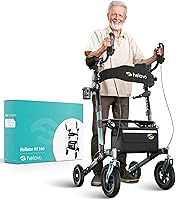
An upright walker supports your forearms on higher armrests; a regular walker generally gives your hands lower grips. That changes your arm position, but it does not decide which frame will feel easier to control.
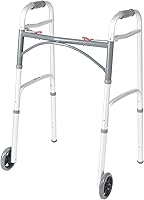
With an upright model, your forearms rest on padded supports and your hands hold handles near the front. With a conventional walker, you grip handles around hand level and guide or lift the frame, depending on whether it has wheels.
“Regular walker” is a broad term. It can mean a basic stationary frame, a front-wheeled walker or a rollator with wheels, hand brakes and a seat.
Who benefits from upright walker arm support?
An upright walker is a sensible choice if you prefer resting your forearms on supports while walking. Check that the armrests and handles can be adjusted to a comfortable height and that the frame fits your routes.
The Helavo has padded armrests and height-adjustable handles. The Agrish has removable armrests and adjusts in width, so it may suit someone who needs a narrower frame or wants the option of standard walker mode.
Skip an upright walker if you cannot comfortably place your arms on its supports, reach its controls or steer its frame. A higher support position is a design feature, not a guarantee that the walker will feel more stable for you.
A regular walker may suit you better if you prefer holding conventional grips or want a simpler frame. If forearm supports are the main question, compare upright walkers and platform walkers before choosing.
How do stationary and rolling walkers move differently?
A stationary walker must be lifted or repositioned as you step; a rolling walker moves on wheels and requires you to steer and control its motion. Either type of arm support can be paired with wheels, so check the actual design.
A basic stationary frame gives you a support point after you place it ahead of you. Repositioning it takes repeated lifting or movement, which can be tiring if you have limited strength or find lifting uncomfortable.
A wheeled design avoids lifting the full frame with every step, but it can roll ahead if you do not control it. Models with brakes require you to learn how to slow, stop and secure the walker.
Rollators are a type of rolling walker, often with a seat and hand brakes. Read our upright walker vs rollator comparison if you're choosing between forearm supports and conventional hand grips.
What should you check before using a rolling walker?
Check that a rolling walker is open, stable and able to stop before each use. If it has a seat, learn how to set the brakes before sitting or standing.
The VOCIC Z21 has three brake modes: free, deceleration and stop. Its use instructions call for checking that the frame is fully unfolded and locked, fasteners are secure, wheels turn smoothly and brakes work.
The Drive Medical rollator has a locking hand brake and a padded seat with a fold-down backrest. Follow the instructions for your chosen model, especially when parking it to sit down.
Which walker fits your daily routine?
Match the walker to your usual route, rest needs and storage space. A frame that fits your home and is manageable to move will serve you better than one chosen by label alone.
A stationary walker can suit short supported trips where you can reposition the frame. A rolling walker may fit longer routes if you can steer and control its movement.
An upright walker can combine forearm support with wheels and a seat. The Helavo includes a padded seat, adjustable backrest, cup holder and cane holder, which may help if you want a place to pause during an outing.
The VOCIC and Drive Medical models also provide seats, but they use hand grips rather than upright armrests. Consider how you will approach the seat, secure the brakes, sit, stand and resume walking.
Will the walker fit through your home?
Measure the narrowest doorway and turning space on your usual route before you buy. Account for the space needed to approach a doorway and turn, as well as the frame's width.
The Agrish adjusts from 18 to 22 in wide. A narrow setting may help in a tight route, but measure the opening and leave room to steer.
The Helavo is 26.4 in wide, so check doorways, hallways and storage areas against that measurement. A frame that passes through a doorway can still be awkward to turn beside furniture.
Map the route between the rooms you use each day. Check bathroom entrances, kitchen turns, rugs and clutter, then consider where the folded walker will be stored.
How do posture and fit affect your choice?
Choose a support height that lets you hold the walker without reaching or leaning awkwardly. If you are unsure which position suits your body or mobility needs, ask a qualified health professional to help assess the fit.
The Helavo's padded armrests and adjustable handles let you change the support position. Helavo describes these features as intended to support a natural walking position; your comfort will depend on your own fit.
The Agrish has adjustable arm support and a sponge handle. Its handles adjust between 42 and 51 in, and its armrests can be removed to change the support style.
Do not choose by adjustment range alone. Stand or sit as directed in the instructions and check that you can reach the grips, operate the brakes and turn without losing comfortable control.
When should you compare specific upright walkers?
Compare arm support, width and daily use before choosing a specific upright walker. A seat or storage feature can be useful, but it does not replace a fit check.
The Vive upright walker review and Helavo upright walker review cover named models. Compare their features with your measurements and the routes you use most.
What are the common walker buying mistakes?
The most common mistake is buying by the label instead of checking support, movement and fit. A few practical checks can prevent a poor match.
- Assuming every regular walker is stationary: Some have wheels or are rollators. Confirm whether you will lift, push or steer the frame.
- Choosing a rolling walker without considering brakes: Make sure you can reach and operate the braking system, and learn how to lock it before using a seat.
- Ignoring doorway width: Measure the narrowest point and the turning space beyond it, not just the doorway at the entrance.
- Treating a seat as a substitute for walking support: A seat is for resting. Check how the walker stops and stays in place before sitting.
- Selecting a frame that feels awkward at the handles or armrests: Adjustability helps only if the available positions fit your posture and reach.
- Forgetting storage and transport: Check the folded size and whether you can manage the walker when folded. A frame that is convenient on a walk may still be hard to store or load.
How should you set up and care for a walker?
Assemble the frame as its instructions direct, then check all adjustments and moving parts before walking. A correct setup helps you learn how the walker responds in a clear, uncluttered space.
For the Agrish, set the width and handle height before use, and make sure any removable armrests are attached as intended. For the Helavo, adjust its handles and backrest to a position you can reach without leaning.
Before using any rolling model, check that it is fully open and locked, the wheels rotate freely and the brakes work. The VOCIC specifically calls for checking knobs, fasteners, seat, backrest, storage bag and brake cable.
Keep wheels and grips clear of dirt and debris, and check for loose parts or changes in how the brakes respond. If a part feels unstable or a brake does not work correctly, stop using the walker until it has been checked or repaired.
Which walker should you choose?
Choose an upright walker if forearm support is your preferred position; choose a regular walker if hand grips or a simpler frame suit you better. Then decide whether stationary legs or wheels are manageable for your strength, balance and routine.
If you want forearm support, measure the route and compare upright frames for armrest fit and steering. If you prefer hand grips, decide whether you need a stationary frame or a rollator with brakes and a seat.
For the keyword question of upright walker vs regular walker, the clearest decision is the one you can use comfortably and control at home and outdoors. If a walker does not provide the mobility support you need, compare other options in our guides to 3-wheel vs 4-wheel mobility scooters and mobility scooters vs electric wheelchairs.
Frequently asked questions
Is an upright walker better than a regular walker?
An upright walker may suit you if its higher armrests let you rest your forearms while walking. A regular walker may suit you better if you prefer hand grips and a simpler frame.
The best fit depends on comfort, balance, strength and where you plan to use it.
Does a regular walker have wheels?
Some regular walkers have no wheels and need to be lifted or moved forward; others have front wheels or wheels on all legs. Check the exact design before choosing, since a stationary frame and a rolling walker move differently and need different handling.
Can an upright walker be used indoors?
Many upright walkers can be used indoors, but width and turning room matter. Measure narrow doorways and the space beside furniture, then compare those measurements with the walker.
An adjustable-width frame may fit better, though you should also check that it feels manageable to use.
Is an upright walker the same as a rollator?
No. Upright walker describes a support position, while rollator usually describes a wheeled walker with hand brakes.
Some products combine both designs, with higher armrests and wheels.
Compare the frame, support points, brakes and seat instead of relying on the name alone.
How should I choose between walker styles?
Consider where your hands and arms rest, whether you can manage wheels and brakes, and how much room you have at home. If possible, ask a physical therapist or other qualified health professional to help assess fit and safe use for your needs.