How to Install a Raised Toilet Seat
To install a raised toilet seat, match it to your toilet, follow its attachment steps, and check that it stays firmly in place before use. The exact setup depends on whether the seat rests on the bowl or uses a frame or locking hardware.
On this page (9 sections)
- How do you install a raised toilet seat safely?
- What should you check before choosing a raised seat?
- Which raised seat style fits your bathroom?
- How do you fit a bowl-top riser?
- How do you set up a commode frame over the toilet?
- What common installation mistakes should you avoid?
- How can you check the fit and care for the seat?
- Which raised toilet seat should you choose?
- How to install a raised toilet seat: what is the final check?
To install a raised toilet seat, match it to your toilet, follow its attachment steps, and check that it stays firmly in place before use. The exact setup depends on whether the seat rests on the bowl or uses a frame or locking hardware.
Start by checking the toilet's shape and the seat's fit requirements. A riser that rocks or shifts is not ready to use; correct the fit before anyone sits down.
How do you install a raised toilet seat safely?
Follow the instructions for your specific seat, then check that it doesn't move. Bowl-top risers, replacement seats, and commode frames use different setups, so don't apply one model's steps to another.
- Check the toilet shape and measurements against the seat's fit requirements.
- Read the instructions and gather the tools they call for.
- Clean and dry the bowl or other surfaces where the seat will attach.
- Position the seat or frame as directed.
- Tighten or lock each attachment part according to the instructions.
- Hold the seat and gently check for rocking, sliding, or lifting before use.
If the seat moves, remove it and review the fit and installation steps. Don't try to stabilize it with improvised padding, tape, or fasteners.
A safe setup also needs room to approach and leave the toilet. For more ways to plan the area, see this bathroom safety guide for seniors.
What should you check before choosing a raised seat?
Confirm the toilet shape, measurements, added height, and attachment style before you buy. A seat that does not match the bowl or the user's needs can be difficult to use, even if it is easy to install.
Measure the toilet as directed by the seat instructions. For an elongated bowl, compare raised toilet seats for elongated toilets.
Check whether the seat is made for a round or elongated bowl and whether it rests on the bowl, replaces the existing seat, or attaches with clamps or other hardware.
Consider how much height the user needs to sit down and stand up more comfortably. Added height changes the transfer, so think about the user's reach, balance, and ability to sit with feet supported.
If the person needs firm arm support, a simple riser may not meet that need.
The raised toilet seat sizes and heights guide explains what to compare. Clear space around the toilet, too, and get help with setup if bending or reaching is unsafe.
Which raised seat style fits your bathroom?
Choose a bowl-top riser for a matching toilet when you want a simple setup; choose a frame-style option when the user also needs support around the toilet. The right style depends on the toilet and the transfer, not just the height.
A bowl-top riser is a separate seat that rests on the toilet bowl. The HealthSmart riser is made for round toilets, adds 5 in of height, and has slip-resistant pads; it supports up to 300 lb.
It suits someone whose toilet is round and who wants a portable riser without assembly.
Skip this riser if the toilet is elongated or if the user needs armrests to push up. A mismatch or a need for more surrounding support calls for another style.
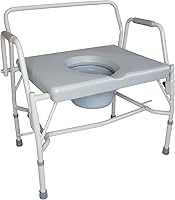
A commode frame placed over the toilet adds a surrounding structure and legs. Follow these toilet safety frame installation steps for setup guidance.
The Drive Medical model has adjustable-height legs, push-pin adjustments, armrests, and a 3-in-1 design that can serve as an over-toilet frame, bedside commode, or safety frame; its stated user limit is 350 lb.
This is a better fit when the user needs the frame's armrests and the bathroom has room for its legs. Skip it if the frame cannot sit level around the toilet or if a compact bowl-top riser is all that is needed.
How do you fit a bowl-top riser?
Place the riser on the bowl as its instructions show, then check that its contact points sit properly. Some models need no assembly, but they still need the right bowl shape and a stable position.
For the HealthSmart riser, lift the current toilet seat and place the riser on the round bowl. It has five slip-resistant pads, but those pads do not make a mismatched or poorly positioned seat safe.
Set the riser flat and make sure it does not rock or slide when checked gently by hand. Follow the instructions about the existing toilet seat, and don't force the riser into place.
If the shape does not match or the riser shifts, stop and choose a model designed for that toilet. Don't add a shim or cushion to fill a gap.
How do you set up a commode frame over the toilet?
Set the frame's height and seat parts as instructed, then check that its feet sit firmly on the floor. A frame needs a stable position around the toilet as well as a secure seat.
The Drive Medical commode uses fold-up steel legs, push-pin height adjustments, and a snap-on seat and lid. Its bucket is for bedside use; when the frame is used over a toilet, set it up for that arrangement according to its instructions.
Check that each height pin is secure, the frame clears the toilet, and the feet rest evenly on the floor. The frame should not rock when you gently check it.
Keep the user's weight within its stated 350 lb limit.
If a bedside commode is a better fit, the raised toilet seat vs. commode chair comparison can help you decide between the two arrangements.
What common installation mistakes should you avoid?
The main mistakes are using the wrong bowl shape, skipping attachment steps, and using a seat that still moves. Pause and correct any fit problem before the user transfers onto it.
Don't assume a round riser will fit an elongated bowl, or that every seat attaches in the same way. Compare the toilet with the seat's requirements before installation, and keep the model's hardware together.
Don't skip a clamp, lock, height pin, or other step shown in the instructions. Avoid overtightening parts or substituting different hardware, since either can interfere with the intended fit.
Don't use the seat as a handhold unless it is designed for that purpose. If the user needs leverage, choose a setup with appropriate arm support or another bathroom aid that meets that need.
How can you check the fit and care for the seat?
Check for movement before first use and again after the seat is removed or cleaned. A clean surface and correctly engaged hardware help the seat stay in its intended position.
Gently press the seat by hand to check for rocking, sliding, or lifting from its contact points. Do not test a loose seat by putting your full weight on it.
Follow the seat's care instructions for cleaning and removal. After cleaning, reinstall it as directed and repeat the movement check before use.
Contact the manufacturer if the instructions are unclear or the seat continues to shift.
For a bedside commode bucket, liners can make disposal simpler, but they do not secure a raised seat or frame. Elzrghs liners are 21 x 16 in disposable liners made for standard commode chair buckets.
Use liners only with a compatible bucket and follow the commode instructions. They are not needed to install a bowl-top riser.
Which raised toilet seat should you choose?
Pick the HealthSmart riser if your toilet is round and you want a portable bowl-top seat; pick the Drive Medical frame if the user needs armrests and your bathroom can fit its legs. Check the toilet shape, transfer needs, and weight limit before choosing.
If the user needs only a higher seat and the bowl matches, the bowl-top riser is the simpler option. If a lid is preferred, compare raised toilet seats with lids.
If the user needs support beside the toilet, a frame-style commode provides armrests, but it takes more space and needs a stable floor position.
Choose another model if neither option matches the toilet or the user's support needs. To compare the wider choice of bathroom aids, read how to install grab bars in a bathroom.
How to install a raised toilet seat: what is the final check?
Match the seat to the toilet, follow its own installation steps, and don't use it if it shifts. A round-bowl riser suits a matching toilet and a user who does not need armrests; a commode frame suits someone who needs arm support and has room for a stable frame.
Before the first transfer, check that all pads, clamps, locks, or height pins are in position. If the seat rocks or the frame feels unstable, stop and correct the setup or choose a better-fitting bathroom aid.
For a broader cost comparison, see raised toilet seat costs.
For readers installing other mobility equipment, how to install a mobility scooter basket and how to install a mobility scooter canopy cover checks for those separate setups.
Frequently asked questions
How do you install a raised toilet seat?
Match the seat to your toilet shape, then follow its instructions for placing, clamping, or locking it in position. Before use, hold the seat and gently check for movement.
If it rocks or shifts, remove it and correct the fit.
Don't use a loose seat.
Do raised toilet seats fit every toilet?
No. Some risers are made for round bowls, while others fit elongated bowls or attach in a specific way.
Measure your toilet and compare its shape and size with the seat instructions before buying.
A seat that doesn't fit properly may shift, so choose one intended for your toilet.
Should I remove my toilet seat before fitting a riser?
It depends on the riser design. A simple bowl-top riser may sit on the bowl with the existing seat raised, while other models replace the seat or use attachment hardware.
Follow the instructions for your model.
Don't improvise with parts or remove hardware unless the instructions call for it.
How can I stop a raised toilet seat from moving?
Choose a seat made for your toilet shape and install every clamp or lock as instructed. Clean and dry the contact surfaces, then check for movement before use.
If it still shifts, stop using it and review the fit.
Don't wedge in tape or other material unless the instructions allow it.