
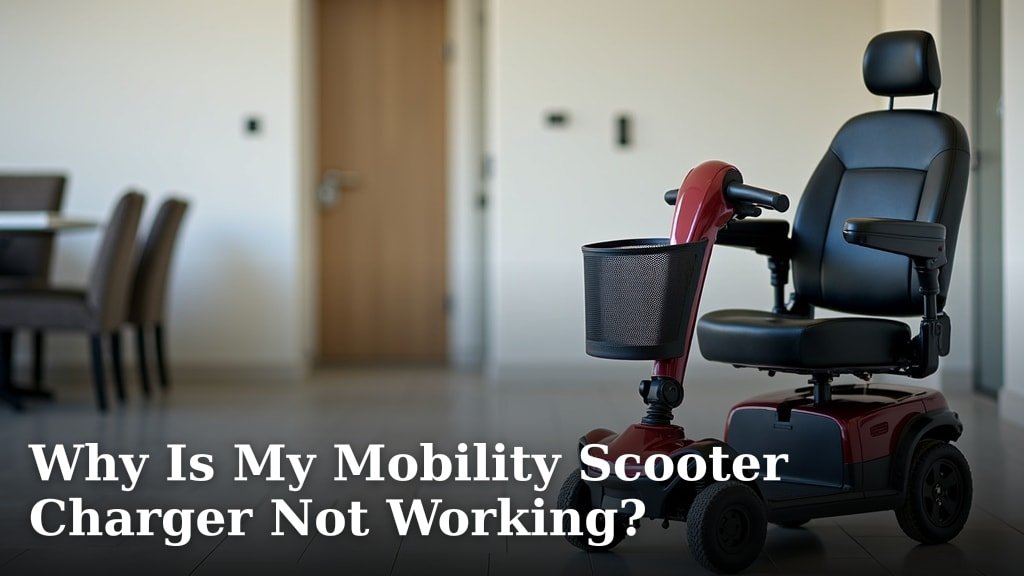
Your mobility scooter charger is not working because of a few common issues, often related to a bad connection, a blown fuse, or a faulty battery. It’s frustrating when your scooter won’t charge, but many problems are easy to fix.
We understand how important your mobility scooter is for getting around and maintaining your independence. When the charger fails, it can feel like a big problem. Don’t worry, we’ve researched and found that most charging issues are quite straightforward to troubleshoot and resolve yourself.
- Check for loose connections.
- Look for visible cable damage.
- Test the power outlet.
- Inspect the charger’s fuse.
- Consider the age and health of your battery.
Let’s walk through these common problems together, so you can get your mobility scooter back up and running.
Troubleshooting Mobility Scooter Charger Problems
When your mobility scooter charger isn’t working, it can bring your day to a halt. The good news is that many common issues are simple to diagnose and fix yourself. We’ll guide you through the most frequent culprits, helping you get back on the road.
The first step is always to check the most obvious problems. You wouldn’t call a mechanic for an empty gas tank, right? The same logic applies here. Let’s start with the basics.
Is Your Charger Plugged In Correctly?
This might seem too simple, but it’s a common oversight. We found that a surprising number of “charger not working” complaints stem from improper connections.
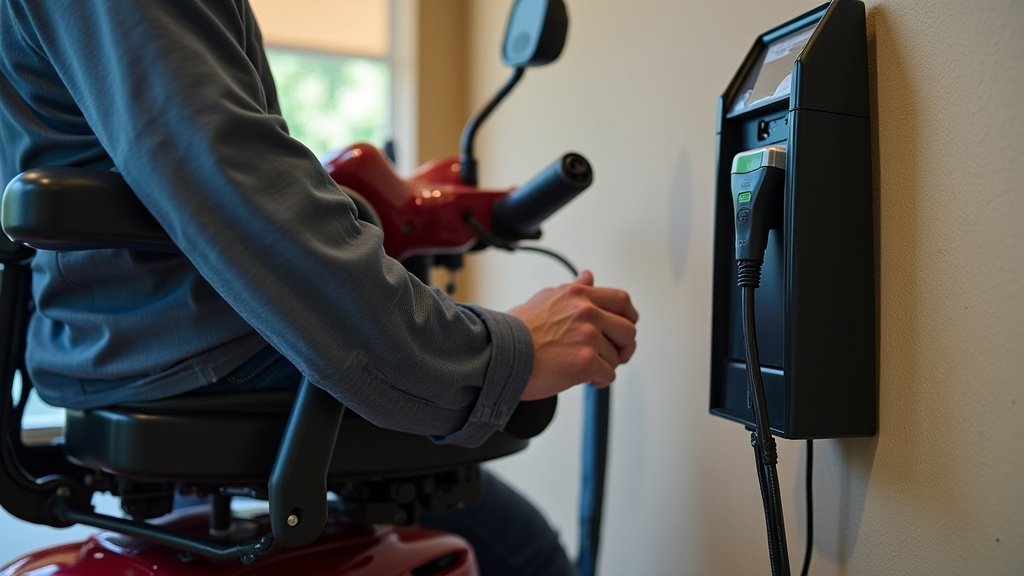
Ensure both ends of your charger cable are securely plugged in. One end goes into the wall outlet. The other goes into your scooter’s charging port. A loose connection means no power flow.
Checking Wall Outlets and Power Strips
Sometimes the problem isn’t with your charger, but with the power source. Is the wall outlet working? Try plugging in another appliance, like a lamp, to test the outlet. If it doesn’t work, you might have a tripped breaker.
Are you using an extension cord or power strip? These can sometimes fail. Try plugging the charger directly into a wall outlet to rule out issues with intermediary devices.
Inspecting the Charger Itself for Damage
Chargers live a tough life. They’re often coiled, uncoiled, and sometimes get run over. Visible damage is a clear sign of trouble. We found that many charger failures are due to physical wear and tear.
Cable Condition and Connections
Carefully inspect the entire length of the charger cable. Look for cuts, frayed wires, or kinks. Pay close attention to where the cable connects to the charger brick and the plug. These areas are prone to bending and breaking internally.
A damaged cable can prevent power flow or even create a safety hazard. If you see significant damage, it’s safer to replace the charger than to risk using it.
The Charger Light: What Does It Tell You?
Most mobility scooter chargers have an indicator light. This light tells you the charger’s status. It might be green when connected to power, then turn red or amber when charging, and back to green when full.
If the light isn’t on at all, it could mean no power is reaching the charger. If it’s flashing erratically, it could signal an internal problem. Consult your scooter’s manual for what different light patterns mean for your specific model. This simple check can offer valuable clues.
Understanding Your Scooter’s Batteries
Your charger’s job is to feed power to your batteries. If the batteries themselves are faulty, the charger might appear not to work. Think of it like trying to fill a bucket with a hole in it. The water goes in, but it doesn’t stay.
Mobility scooters typically use sealed lead-acid (SLA) or lithium-ion batteries. Each type has a lifespan and specific charging needs (Mayo Clinic).
Battery Age and Lifespan
Batteries don’t last forever. SLA batteries generally last 1-2 years, while lithium-ion can last 3-5 years or even longer. As batteries age, their ability to hold a charge diminishes. An old battery might appear not to charge, even with a working charger.
Have you replaced your batteries recently? If not, their age could be the root cause of your charging woes. Many experts say that battery age is a primary factor in scooter performance issues.
Deep Discharge and Battery Health
Allowing a battery to completely drain, or “deep discharge,” can harm it. If your scooter has been left unused and uncharged for a long time, the batteries might have entered a state where they can no longer accept a charge. This is called “sulfation” for SLA batteries and can significantly reduce their lifespan.
Some chargers have a “desulfation” mode, but this isn’t always effective for severely damaged batteries. If your scooter has been sitting for months, the batteries might be beyond recovery and need replacement.
The Charger’s Fuse: A Common Culprit
Many chargers, especially older models, have a fuse. A fuse is a safety device designed to break a circuit if there’s an electrical overload. If it blows, your charger won’t work. This is a simple and inexpensive fix if it’s the problem.
How to Check and Replace a Fuse
First, unplug the charger from both the wall and the scooter. Locate the fuse holder on your charger. It might be a small cap that unscrews, or a compartment you can open. Inside, you’ll find a glass or ceramic tube with a wire running through it.
If the wire inside is broken or there’s a dark, smoky residue, the fuse is blown. Replace it with a new fuse of the exact same amperage and voltage rating. Using the wrong fuse can damage your charger or scooter. You can usually find these at electronics stores.
Testing Your Charger’s Output (Caution Advised)
For those comfortable with basic electrical testing, you can check if your charger is producing voltage. This requires a multimeter. If you’re not comfortable with electrical work, please skip this step and consult a professional.
With the charger plugged into the wall but NOT the scooter, carefully touch the multimeter probes to the charger’s output pins. Set the multimeter to DC voltage. You should see a reading close to the charger’s stated output voltage. If there’s no reading, or a very low one, your charger is likely faulty.
When to Consider Professional Help
While many problems are DIY-friendly, some require expert attention. If you’ve tried all the above steps and your charger still isn’t working, or if you suspect a deeper electrical issue with your scooter, it’s time to call in the pros.
A certified mobility scooter technician can perform more detailed diagnostics. They have specialized tools and knowledge to pinpoint complex issues. Don’t hesitate to seek help if you’re out of your depth. Your safety and the scooter’s longevity are important.
Quick Troubleshooting Checklist
Here’s a summary of what to check, to help you quickly narrow down the issue:
- Is the charger securely plugged into both the wall and the scooter?
- Does the wall outlet work with other devices?
- Are there any visible damages to the charger cable or brick?
- What does the charger’s indicator light tell you?
- When were your scooter’s batteries last replaced?
- Have you checked and possibly replaced the charger’s fuse?
Comparing Charger Issues: A Quick Guide
Sometimes it helps to see potential problems laid out clearly. We put together this table to help you quickly identify common symptoms and their likely causes:
| Symptom | Likely Cause | Action to Take |
|---|---|---|
| No light on charger, no charging | Loose connection, dead outlet, blown fuse, internal charger fault | Check plugs, test outlet, replace fuse, consider new charger |
| Charger light on, but no charge to scooter | Bad scooter charging port, faulty battery, internal scooter wiring | Inspect scooter port, test batteries, seek professional help |
| Charger light flashes/changes erratically | Faulty battery, charger internal fault, incorrect battery type | Check battery health, consult manual, consider new charger |
| Scooter charges slowly or not fully | Aging batteries, underpowered charger, battery imbalance | Replace batteries, ensure correct charger for scooter |
| Charger gets very hot | Overload, internal fault, bad battery, poor ventilation | Unplug immediately, check for damage, ensure ventilation |
By systematically working through these checks, you can often solve the problem of a non-working mobility scooter charger yourself. Remember, patience and careful observation are your best tools in troubleshooting.
Conclusion
Dealing with a non-charging mobility scooter can be incredibly disruptive. We found that many issues often boil down to a few common culprits, from a simple loose plug to an aging battery or a blown fuse. By systematically checking each potential problem, you can often diagnose and fix the issue yourself, saving time and money.
Your independence is important, and keeping your scooter running smoothly is key. If you’ve walked through these steps and your charger is still acting up, don’t hesitate to reach out to a professional. Getting your mobility scooter back to full power is our main goal.
Frequently Asked Questions
Why does my mobility scooter charger light flash red?
A flashing red light often indicates an error. This could mean a faulty battery connection, a deeply discharged battery the charger can’t “wake up,” or an internal issue with the charger itself. Consult your scooter’s manual for specific error codes related to the red light.
Can a mobility scooter charger overcharge a battery?
Most modern mobility scooter chargers have built-in smart technology to prevent overcharging. They sense when the battery is full and switch to a maintenance or trickle charge. However, using an old, incompatible, or faulty charger can potentially lead to overcharging or battery damage.
How can I extend the life of my mobility scooter battery?
To extend battery life, avoid deep discharges by charging regularly, ideally after each use. Store your scooter in a cool, dry place and keep the battery fully charged when not in use for extended periods. Also, ensure you use the correct charger for your battery type and size. Our guide on how to extend battery life offers more tips on maintaining your scooter’s power source.
Is it safe to leave my mobility scooter plugged in all the time?
Yes, it’s generally safe to leave your mobility scooter plugged in. Modern chargers are designed to maintain the battery without overcharging it, which can actually help prolong battery life. This is especially true for sealed lead-acid batteries, which benefit from being kept fully charged.
What’s the difference between a 2-amp and a 5-amp charger?
The amperage (amps) indicates how quickly a charger can deliver power. A 5-amp charger will charge your mobility scooter battery faster than a 2-amp charger. Always use the charger recommended by your scooter’s manufacturer to avoid damaging the battery or charger.
